
3D Textured Slatwall vs Printed Flat Panels
3D textured slatwall vs printed flat panels is a comparison between physical surface relief and a flat graphic appearance. True 3D textured slatwall creates raised and recessed forms that react to store lighting, while a printed flat panel uses color and pattern to suggest materials such as brick, wood, stone, or metal without creating the same depth.
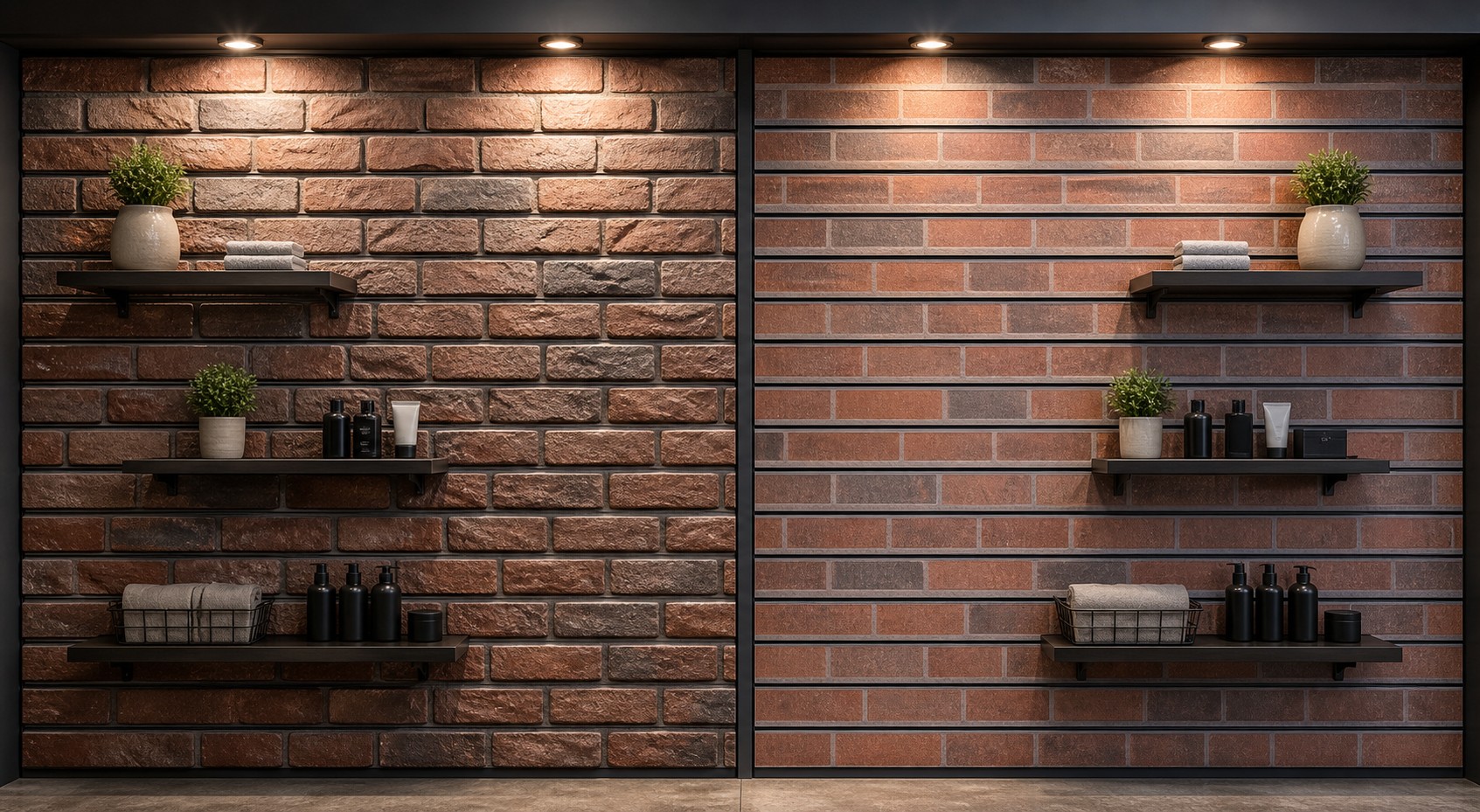
Both approaches can support a retail display when they are part of a suitable slatwall system. The choice depends on how important physical realism, feature-wall impact, budget, installation planning, and future store changes are to the project.
3D Texture vs Printed Surface at a Glance
| Decision factor | True 3D textured slatwall | Printed flat panel |
|---|---|---|
| Surface | Raised and recessed physical relief | Flat surface with a printed or laminated pattern |
| Lighting | Creates changing highlights and natural shadows | Appearance remains visually flatter as lighting changes |
| Realism | Can suggest physical brick, barnwood, block, tile, metal, or other formed materials | Uses graphic detail to suggest material appearance |
| Installation focus | Texture direction, seams, cuts, trim, and pattern continuity need extra planning | Pattern alignment and standard panel finishing remain important |
| Budget direction | Usually selected as a premium feature-wall system | Often selected when a decorative look and lower entry cost matter more than depth |
| Best role | Destination wall, branded department, premium showroom, or high-impact zone | Broad wall coverage, utility merchandising, or budget-led decorative treatment |
What Makes a Slatwall Truly 3D?
A true 3D panel has a physically formed surface. Brick joints, wood planks, block faces, tire tread, corrugation, or other details project from or recede into the panel. That physical geometry remains visible from different angles and creates real shadow.
RDUSA's textured slatwall range includes brick, barnwood, cement, corrugated metal, slate, block, weathered wood, heavy metal, diamond plate, wave, pallet, tile, tire tread, and other directions. Buyers should inspect current samples because texture scale, color, sheen, and relief vary by product.
What a Printed Flat Panel Does Well
A printed or melamine-faced flat panel can provide color, pattern, and a coordinated finish without the forming and trim considerations of a deep textured surface. RDUSA's LPL range includes numerous decorative and melamine-faced directions.
Flat patterned panels can work well where:
- the wall will be densely covered by merchandise
- broad coverage matters more than physical depth
- the store expects frequent visual resets
- a simpler decorative background is preferred
- the project budget prioritizes selling capacity over a feature-wall effect
This does not make a printed panel inferior. It makes it a different design and budget choice.
How Store Lighting Changes the Comparison
Lighting is one of the clearest differences. Directional light across physical texture creates highlights and shadows that move as the shopper changes position. Flat printing can illustrate shadows, but those shadows do not change with the room.
Before ordering a prominent textured wall, review a sample under the store's actual lighting direction and color temperature. A texture that looks subtle in diffuse light may become much stronger under directional track lighting.
Compare the Wall From the Shopping Distance
Close-up samples are useful, but the wall must also work from the aisle. Test the finish from:
- the front entrance
- the main cross aisle
- the expected product-viewing distance
- an angle near the wall
- the position where signs and merchandise will sit
True 3D depth can make a department easier to identify from a distance. A flat pattern may create a cleaner, quieter background for dense products.
Merchandising on a Strong Texture
The merchandise should remain the reason for the wall. Physical texture creates more visual activity, so use disciplined product spacing, consistent accessory finishes, and clear category zones.
Brick, barnwood, and cement can each support different brand stories. The store should choose the texture that reinforces the product rather than selecting the most dramatic sample in isolation.
Installation and Seam Planning
Both systems require a suitable wall, level layout, product-specific fastening, clean cuts, and confirmed accessories. True 3D panels add visible texture direction, deeper edge conditions, pattern continuity, and matching trim to the planning process.
Do not assume every textured finish should use the same seam arrangement. Panel dimensions, plank options, wall width, corners, and the product pattern affect the best layout. Review the separate slatwall installation guide and follow the current product instructions.
Why 3D Textured Slatwall Usually Costs More
The premium can reflect:
- physical forming or shaping
- specialized finish work
- additional quality control for visual consistency
- matching edge and corner trim
- pattern and seam planning
- packaging and freight protection
- a more involved feature-wall installation
Compare current quotes rather than relying on a general percentage. Product, quantity, finish, freight, and project details change.
When to Choose True 3D Textured Slatwall
Choose true 3D texture when the wall should:
- establish a distinctive store atmosphere
- create a premium feature area
- reinforce a material-led brand story
- remain visually important even with a lighter product load
- provide physical depth that changes with lighting and viewpoint
When a Printed Flat Panel May Be Better
Choose a flat decorative panel when the store prioritizes:
- broad economical wall coverage
- dense merchandising
- a quieter background
- simpler pattern and edge planning
- fast visual coordination with standard fixtures
The correct decision is about store role, not which surface sounds more premium.
Frequently Asked Questions
Is 3D textured slatwall only a printed pattern?
No. True 3D textured slatwall has physical raised and recessed relief. Confirm the actual sample because products described as textured in the wider market may use different constructions.
Can printed slatwall still look realistic?
High-quality printing or laminate can communicate convincing color and pattern, especially behind merchandise. It does not create the same changing physical shadow as real relief.
Is 3D slatwall harder to install?
It can require more seam, trim, cut, and texture-direction planning. Installation still depends on the exact product and wall.
Does 3D textured slatwall accept accessories?
It is intended as a merchandising wall, but compatibility and load guidance must be confirmed for the selected panel and accessories.
Which option is better for a feature wall?
True 3D texture usually creates the stronger feature-wall effect. A printed panel may be better where merchandise density and budget matter more than physical depth.
Final Recommendation
Choose 3D textured slatwall vs printed flat panels by deciding whether the store needs physical depth or a decorative graphic background. Review current samples under real lighting, place representative products in front of them, and compare complete quotes including panels, inserts, trim, freight, and installation. Start with RDUSA textured slatwall and request samples through Samples & Quotes.
Retail Planning Resource
The National Retail Federation publishes retail operations and store-design research that can support broader fixture decisions.