
Glass Display Cases for Retail Stores
Glass display cases are the right fit when the store wants visibility and protection at the same time. Buyers usually search this term when they want a case that feels light and premium, but still gives the merchandise more control than an open table or wall fixture.
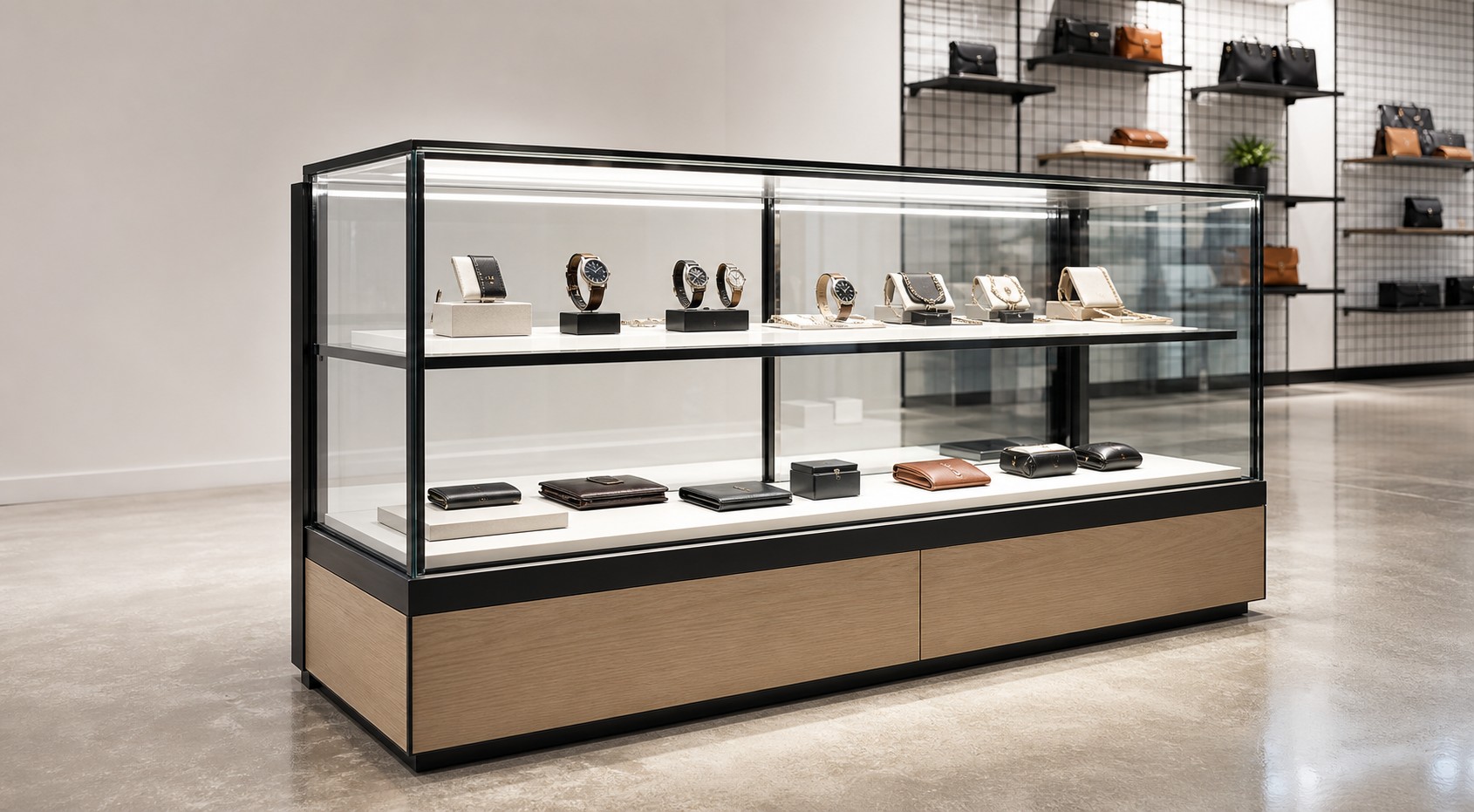
RDUSA's glass counters and cases, broader cases and counters, and wall display cases are the commercial product paths behind this search. This guide focuses on how glazing, viewing angle, access, and service role change the buying decision.
Quick Buyer Comparison
| Decision factor | Glass display case | Open table or pedestal |
|---|---|---|
| Security | Better containment and controlled access | Open browsing with less protection |
| Visibility | High visibility with a premium feel | Good visibility, but less control over the product story |
| Buyer check | Confirm lighting, locks, finish, and access | Confirm footprint, lift, and display density |
When Glass Display Cases Make Sense
Glass display cases are strongest when the store wants merchandise to stay visible but not fully exposed. That makes them useful for jewelry, collectibles, premium accessories, electronics, and other items that benefit from clearer control.
Glass cases are especially useful for:
- jewelry
- collectibles
- premium accessories
- small electronics
- gift-led feature displays
Glass vs Other Case Materials
Glass is not automatically better than wood or metal. It changes the visual weight of the fixture. Glass feels lighter and more open. Wood feels warmer and more grounded. Metal can feel more commercial or more durable depending on the finish.
If the store needs a more enclosed service role, compare the case against cases and counters. If the goal is a wall-mounted presentation, the broader wall display cases path is still the right starting point.
What to Confirm Before Ordering
Before buying, confirm:
- whether the case is wall-mounted or floor-based
- lighting and power requirements
- lock and staff access method where selected
- finish and glass direction
- shelf count and usable display area
- packaged dimensions, freight, and assembly
- customer viewing position and staff work space
Glass cases should always be chosen with the full merchandising plan in mind. A premium case can still fail if the product is too dense, too dark, or too difficult to access.
Select the Case From the Product and Service Model
Start with the product rather than the case silhouette. Record representative item dimensions, packaging, display stands, trays, signs, and the number of products that should appear together. Fine jewelry, collectibles, electronics, cosmetics, trophies, and premium accessories need different shelf depths, viewing angles, access, and lighting.
Then define how customers buy. Some products can be viewed independently until an employee opens the case. Others require consultation, comparison, fitting, demonstration, or checkout at the fixture. The service model determines whether the store needs a wall showcase, full-vision case, counter-height case, register stand, corner unit, or coordinated run.
Use a simple planogram before ordering. Place each product group on a sketch of the proposed case and leave realistic open space. This exposes when a case that looks large externally has insufficient useful display area.
Plan Viewing Angles and Lighting
Glass increases visibility, but it also reflects windows, ceiling lights, signs, and bright merchandise nearby. Test the intended location at different times of day. Look from the main customer approach and from the height at which shoppers will browse.
Confirm whether lighting is included, optional, or absent on the exact case. Review glare, shadow, color appearance, power access, cable management, heat considerations, and how staff will service the lights. Lighting should make the merchandise easier to evaluate rather than turning the glass into a mirror.
For a mixed case run, keep lighting color and intensity coordinated. A brightly lit case beside an unlit case can make the second assortment appear less important even when both product groups have equal value.
Plan Staff Access and Daily Work
Map the employee side of the case. Staff need room to unlock and open doors, retrieve products, present them safely, replenish trays, clean the glass, and return items without losing contact with the customer. Do not block access with point-of-sale equipment, packaging, or unrelated storage.
If several cases form a counter run, include staff openings and the route to back stock. A continuous line may look clean in a drawing but create inefficient walking or trap employees behind the counter.
Locks and enclosed glass may support controlled access, but they do not guarantee security. Coordinate case selection with staffing, key control, cameras, alarms, sightlines, after-hours procedures, and professional security advice where appropriate.
Compare Wall, Floor, and Counter Cases
Wall display cases use vertical perimeter space and can support brand stories, secondary collections, trophies, or merchandise that benefits from front viewing. They need a suitable wall location and a confirmed installation approach.
Floor and counter cases create a stronger service point and can support top or front viewing. They consume floor area and must be planned with customer standing space and staff access. Ready-to-ship case families may simplify a coordinated run when the current models fit the store.
Many retailers use both. Place service-intensive products near staff positions and use wall cases for collections that can be browsed with less assistance.
Plan Freight, Receiving, and Assembly
Glass cases need a measured delivery route. Confirm packaged dimensions, doors, turns, elevators, stairs, loading conditions, and the final placement area. Ask whether the case ships assembled, partially assembled, or knocked down and who is responsible for unloading, moving, assembly, anchoring, and electrical connection.
Inspect the delivery before loading merchandise. Check cartons and glass for damage, then verify doors, shelves, hardware, lights, locks where selected, finish, level, and alignment. Follow the carrier and supplier procedures for documenting freight issues.
OSHA's materials-handling guidance provides useful general receiving and workplace-safety context. The exact product instructions and qualified project professionals should guide case handling and installation.
Build a Like-for-Like Quote
Two glass-case quotes are not comparable unless they include the same role and options. Ask each proposal to identify the case format, usable display area, glazing direction, frame profile, shelf layout, customer and staff access, doors, locks and lighting where selected, storage or checkout functions, packaged dimensions, freight, assembly, and installation responsibility.
Do not infer missing options from a product photograph. Use the written quote and current product page as the purchase record.
Common Buying Mistakes
Avoid selecting a case from appearance alone, overcrowding small products, ignoring reflections, assuming glass automatically makes a display look premium, assuming lights or locks are included, and failing to plan staff openings. Glass can expose clutter as much as it protects merchandise, so the frame, lighting, shelf spacing, and product density matter together. Other expensive mistakes include measuring only the final footprint, overlooking the packaged delivery size, and loading merchandise before the case has been fully inspected.
Frequently Asked Questions
What are glass display cases used for?
They are used to protect and present merchandise that needs stronger control than an open display provides.
Are glass display cases practical for daily retail use?
Yes, if the store plans for cleaning, access, and the right product size. They are common in controlled retail environments.
Are glass display cases better than wood cases?
Not always. Glass-forward cases suit merchandise that benefits from visibility from several angles. A case with more solid panels or a wood-look finish may suit a warmer visual direction or a store that wants less exposed product.
What should I compare before ordering?
Compare case role, usable display area, access, shelving, glass, finish, lighting, locks, storage, freight, assembly, and delivery conditions.
Should a glass case be used as a checkout counter?
Some counter cases can support transactions, but the exact fixture must also provide the required work surface, equipment space, storage, staff access, and customer flow. Do not assume every showcase is a suitable cashwrap.
How should several glass cases be planned together?
Draw the complete run with corners, staff openings, customer approaches, power, lighting, finish, and product assignments. Confirm how adjoining cases align before ordering.
Choose Visibility With an Operating Plan
Glass display cases work best when clear product viewing is matched with staff access, controlled merchandise handling, realistic lighting, and a measured delivery plan. Review current glass counters and cases, compare wall display cases, then use Samples and Quotes to confirm the selected model, options, freight, and assembly requirements.