
Retail Store Fixtures: A Complete Buyer's Guide for Store Owners
Retail store fixtures shape how customers move, compare products, and understand what a store is trying to sell. Opening or refreshing a retail store requires a fixture plan before it requires a fixture order. The categories interact with each other: a slatwall wall needs the right accessories to sell product, a mannequin needs nearby racks or shelves to carry the items it is showing, and a display table needs a defined traffic path or a wall system adjacent to it. Buying fixtures without a plan usually means buying again later.
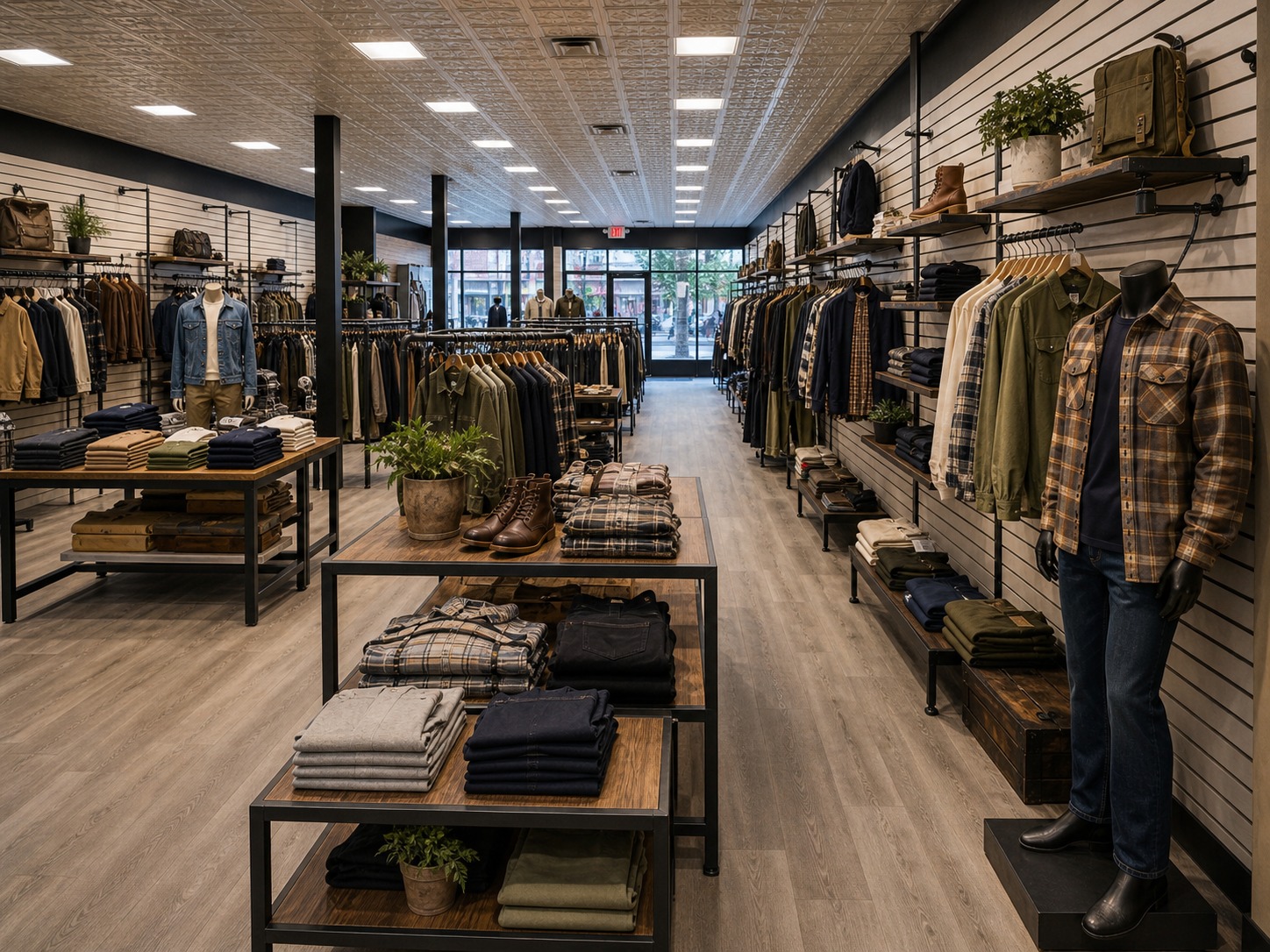
This guide covers the core retail fixture families most stores need to compare, how to build a fixture order from a floor plan, and how to avoid the most common planning mistakes. Retail Display USA carries fixture categories including slatwall, gridwall panels, display tables, mannequins, t-shirt displays, and related slatwall accessories. The right starting point depends on the merchandise and the store format, not on a generic catch-all category claim.
Why Retail Store Fixture Planning Matters
A strong fixture plan starts with the merchandise. For boutiques, gift shops, apparel stores, sporting goods retailers, showrooms, and remodel projects, the fixture system must hold product securely, support the brand look, and make daily restocking practical for staff.
Fixture planning matters before purchasing because the categories are interdependent. Slatwall panels need the right accessory mix. Gridwall works differently from slatwall in both appearance and product handling. Mannequins need nearby inventory support. Display tables help shape the customer path, but they cannot replace a well-planned wall program. Getting these relationships right in the planning phase costs little. Getting them wrong after installation is expensive.
The Main Fixture Families to Compare
Most store owners should compare retail store fixtures in groups instead of trying to shop the whole store as one decision.
Slatwall
Slatwall is usually the strongest starting point when a store needs a finished wall surface that can support shelves, hooks, hangrails, faceouts, and mixed product presentations. It works well for apparel, gift, specialty retail, and display walls that need both function and a more deliberate visual finish.
Gridwall Panels
Gridwall panels are practical when the store needs quick resets, dense hook-heavy displays, or a more utility-driven wall. They are often useful for packaged goods, accessories, temporary merchandising, or support zones where flexibility matters more than a polished wall surface.
Display Tables
Display tables are floor fixtures that create feature moments, hold folded goods, and support higher-touch products. They are most effective when they work with the wall display instead of competing with it.
Mannequins
Mannequins help stores sell outfit stories, silhouette, fit, and brand mood. They are especially important in apparel, activewear, boutique, and showroom environments where product context drives the sale.
T-Shirt Displays and Specialty Fixtures
T-shirt displays, rolling racks, and other specialty pieces matter when a product category needs a dedicated presentation method. These should support the main store plan, not replace it.
What to Decide Before Ordering Fixtures
Before reviewing specific products, answer a few planning questions.
What is the product mix?
A store selling hanging apparel needs a different fixture plan from a store selling mostly packaged goods or boxed gifts. Product type determines whether the store needs hangrails, shelves, hooks, tables, mannequins, or a combination.
How much wall and floor space is usable?
Measure wall length, wall height, traffic aisles, front-of-store sightlines, and any dead corners. Retail store fixtures are sized to real space, not to estimated square footage.
How often will the layout change?
Stores with frequent resets need more adjustable fixtures. Stores with stable assortments can invest more heavily in permanent wall programs and more finish-driven displays.
What look should the store communicate?
A boutique may need textured slatwall, mannequins, and a lighter accessory load. A sporting goods store may need gridwall for add-ons, slatwall for apparel, and durable tables for feature goods. A gift store may need shelves, hooks, and frequent seasonal resets.
Store-Type Planning Examples
Boutique
Boutiques usually need a combination of slatwall, shelves, display tables, and mannequins. The goal is a curated presentation rather than maximum wall density.
Gift Shop
Gift shops often need flexible accessories, shelves, nesting or display tables, and a clear category structure. Wall and floor fixtures should support frequent seasonal changes without turning the store into a stockroom.
Apparel Store
Apparel stores should plan wall systems, hangrails, mannequins, and tables as one package. The wall holds depth and size runs. The floor holds feature stories and folded product. Neither one should try to do all the work alone.
Sporting Goods or Activewear Store
Sporting goods and activewear stores often need slatwall for apparel, gridwall for packaged accessories, athletic mannequins for outfit context, and durable floor fixtures that can take frequent traffic and reset cycles.
Specialty Retail
Specialty retailers should start with how customers handle the product. If items are small and packaged, gridwall or hook-heavy slatwall may work. If the store needs a more premium wall, slatwall and display tables may be the better investment.
How to Build a Fixture Order
A practical fixture order begins with a measured floor plan. Mark entrances, checkout, fitting rooms, stockroom access, wall runs, aisle paths, and the areas that need the most visual emphasis. Then assign fixture roles.
For example, a new apparel boutique might use slatwall on the main feature wall, display tables in the center, mannequins near the entrance, and racks or secondary fixtures for flexible seasonal inventory. A gift shop might use shelves and hooks on the perimeter walls, tables for seasonal stories, and one focal display near checkout. A sporting goods store might split the wall system between slatwall apparel zones and gridwall accessory zones.
The order also has to include the accessories that make the fixtures usable. Slatwall panels need hooks, shelves, hangrails, or faceouts. Gridwall needs the right compatible hooks and baskets. Tables need a placement plan. Mannequins need nearby inventory support so customers can actually buy the outfit being shown.
Common Mistakes Store Owners Make
The first mistake is buying by fixture type before understanding the product mix. A store can spend heavily on attractive fixtures and still end up with poor product handling.
The second mistake is planning wall and floor fixtures separately. A wall program without floor support can feel flat. A floor plan without wall discipline can feel crowded.
The third mistake is assuming one fixture family will solve the whole store. Most successful layouts mix fixture types with clear roles.
The fourth mistake is waiting until after panel installation to think about accessories. That usually creates reorders, mismatched hardware, or display zones that cannot hold the actual merchandise cleanly.
Build the Right Retail Store Fixture Mix
Retailers planning retail store fixtures should start by comparing the product families that match the merchandise: slatwall, gridwall panels, display tables, mannequins, and t-shirt displays.
One realistic layout approach is to choose the fixture family that handles the store's main product type, then add supporting fixtures around it. A boutique might use slatwall on the feature wall, gridwall in a utility area, and display tables for featured floor product. A sporting goods store might reverse that balance in some departments. The important point is that each fixture should have a defined role instead of acting as a generic catch-all surface.
FAQ
What fixtures are needed to open a retail store?
The specific fixture list depends on the store type, product mix, and floor plan. Most stores need a combination of wall fixtures such as slatwall or gridwall, floor fixtures such as display tables or racks, and category-specific pieces such as mannequins or specialty displays.
What is the difference between slatwall and gridwall?
Slatwall is a grooved panel system that creates a cleaner wall surface and supports shelves, faceouts, hooks, and hangrails. Gridwall is an open wire grid system that works well for hook-heavy packaged goods displays, temporary retail, and utility areas where fast resets matter more than finish.
How should a store choose fixtures by product category?
Match the fixture to the product handling requirements. Hanging apparel needs hangrails, faceouts, or racks. Folded goods need shelves or tables. Pegged packaged goods need hooks. Products that need outfit context benefit from mannequins.
When should a retailer get layout help?
Retailers should get layout help when the store has limited square footage, mixed product categories, unusual wall dimensions, or a full remodel deadline. The important step is to finalize measurements, circulation, and fixture roles before the first order is placed.
How should retailers choose retail store fixtures?
Start with a measured floor plan and a clear picture of the product mix. Identify the fixture categories the store genuinely needs, then choose within each category based on product requirements, store aesthetic, and budget. Confirm accessory compatibility before finalizing the order, and plan wall and floor fixtures at the same time so both work as part of one coordinated system.
Retail Planning Resource
For broader retail planning context, the National Retail Federation publishes retail industry research and store operations insights that can help store owners connect fixture decisions with shopper behavior.