
Rolling Racks for Retail Stores: Buyer Guide
Rolling racks for retail stores are best when merchandise must move between receiving, backstock, the selling floor, events, or temporary layouts. They are especially useful for pop-up shops, apparel launches, floor resets, and overflow handling, but mobility should not replace a stable merchandising plan for the store's permanent categories.
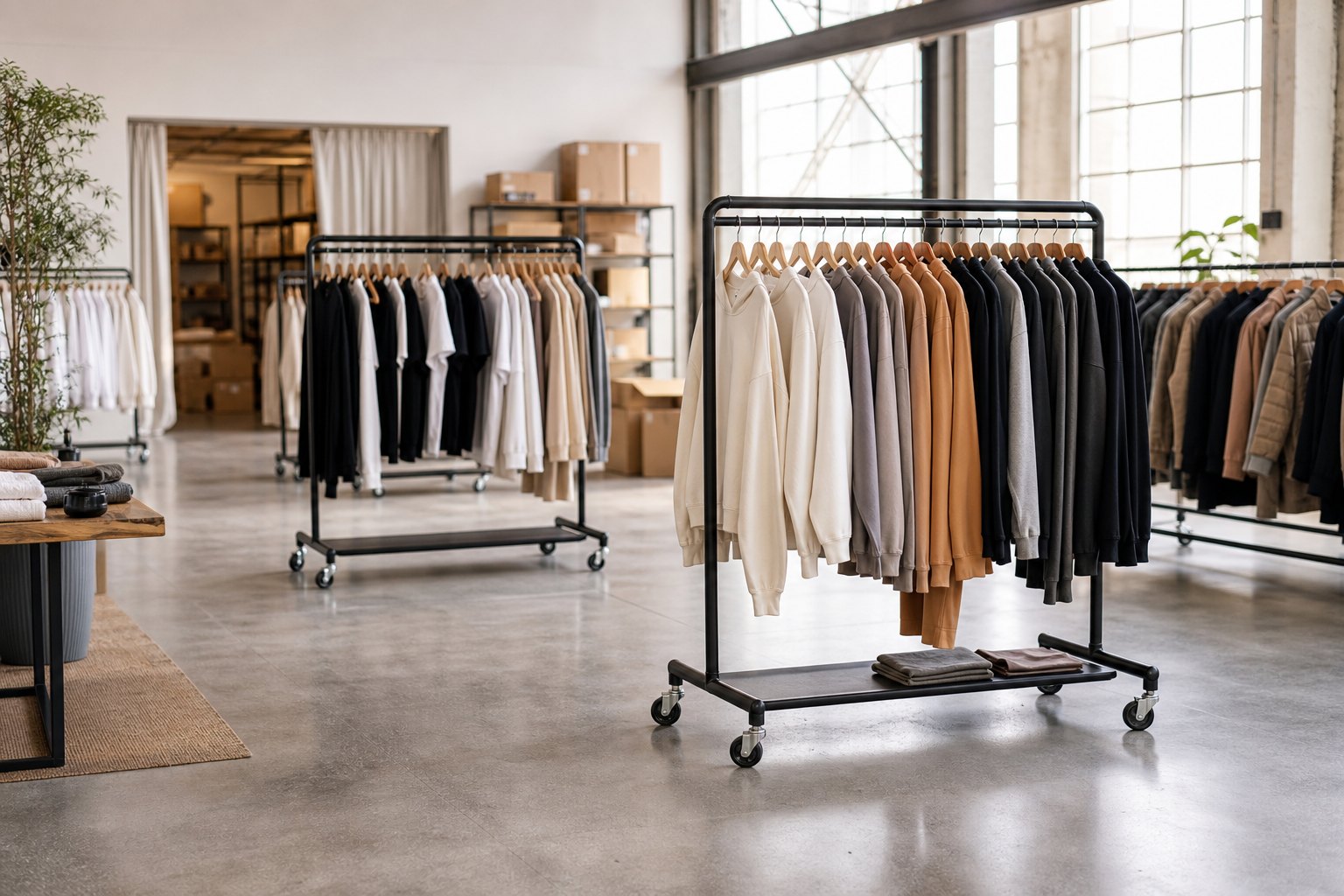
The buying decision should start with the rack's job. A rack used for customer browsing has different priorities from one used mainly for transport or temporary staging. Review the current RDUSA rolling racks, then confirm the exact dimensions, construction, finish, caster design, capacity guidance, and assembly requirements for the selected model.
Quick Use-Case Guide
| Use case | Primary priority | Planning question |
|---|---|---|
| Pop-up shop | Portable, presentable selling-floor fixture | Will it fit transport, setup, and customer circulation? |
| Seasonal floor set | Fast repositioning | Can staff move it safely without disrupting adjacent displays? |
| Backroom-to-floor replenishment | Operational movement | Does the route include thresholds, tight turns, or elevators? |
| Event or market | Compact logistics and stable presentation | What happens during transport, setup, and uneven loading? |
| Permanent apparel run | Daily shopping and visual consistency | Would a fixed retail rack provide a more intentional presentation? |
Why Rolling Racks Work for Pop-Up Shops
Pop-up retail depends on quick setup, a clear product edit, and fixtures that can leave when the event ends. A rolling rack can move garments into place and then serve as the selling fixture, reducing the number of separate handling steps.
That convenience only works when the rack fits the complete trip. Measure the vehicle or freight space, doorways, elevator, setup area, and selling footprint. If the rack must be broken down for transport, confirm how assembly works before the event. If it will move while loaded, confirm the manufacturer's intended use rather than assuming every rack is designed for that task.
Keep the Pop-Up Assortment Edited
A mobile rack can become crowded because it is easy to add "just one more" style. Instead, group garments by collection, color, size logic, or use. Keep enough spacing for customers to separate items without pulling an entire run out of order.
Use a nearby sign holder, table, or mannequin for the featured story. The rack should make the inventory easy to browse, while the supporting fixture communicates the campaign.
Rolling Racks on a Permanent Apparel Floor
In a permanent store, mobility is useful for resets, events, and seasonal changes. It can also help staff clear an area for cleaning or rearrange the floor for a launch. However, a selling floor made entirely of temporary-looking racks may weaken the store's visual structure.
Compare rolling models with the broader retail clothing rack range. Fixed two-way, four-way, round, or collection-specific racks may create a stronger long-term category plan. Rolling racks can then support the areas that genuinely need movement.
Use Mobility Deliberately
Decide who is allowed to move the rack, where it may be parked, and what must be removed first. A rack that drifts into an aisle, blocks a sightline, or separates coordinated products creates more work than it saves.
Floor markings, reset diagrams, or simple position notes can help staff return mobile fixtures to the intended location. The goal is flexible execution without an improvised-looking floor.
Plan the Merchandise Before the Rack
Garment length, weight, hanger type, and quantity all affect the practical choice. Long dresses and outerwear need different clearances from children's tops. Dense garments can change how easily shoppers browse and how a rack behaves during movement.
Do not use a generic garment count as the only capacity measure. Confirm the selected product's guidance, then test a representative assortment. A visually full rack may still be too dense for customer browsing even when it remains within a stated product limit.
Pair the rack with suitable retail hangers and use consistent hanger orientation. Mixed hanger shapes and uneven spacing make a mobile display look like backroom storage.
Shopper Flow and Floor Placement
Map the rack at its widest and longest practical condition, including garments extending beyond the frame. Leave room for customers to stand, browse, and pass without pushing against another fixture.
For pop-ups, identify the queue, checkout, fitting, and exit paths before placing the merchandise. For permanent stores, protect main sightlines and avoid creating a movable barrier near entrances or emergency routes. Project-specific code and accessibility requirements should be confirmed with the appropriate local professionals.
Build a Shoppable Zone
A rack becomes more useful when the customer can understand what belongs together. A nearby mannequin display can show a complete outfit, while the rolling rack carries the available sizes. A table can hold folded coordinates or accessories.
This creates a simple buyer flow:
- See the complete look.
- Browse the garment run.
- Find the correct size.
- Add a coordinated item.
Operational Checks for Staff
Before using a rolling rack in daily operations:
- inspect casters and fasteners according to the product instructions
- keep the intended travel path clear
- move the rack using the method specified by the manufacturer
- avoid uneven loading that makes the display difficult to control
- decide whether garments should be removed before crossing thresholds or ramps
- return the rack to a defined selling-floor or storage position
These are planning prompts, not model-specific operating instructions. Follow the documentation supplied with the exact product.
Common Buying Mistakes
The first mistake is buying for mobility without measuring the travel route. A rack that fits the floor may not fit the elevator, doorway, vehicle, or storage area.
The second is assuming casters automatically make a rack suitable for moving while fully loaded. Intended movement and load guidance vary. Confirm them for the selected product.
The third is using an operational transport rack as a permanent feature fixture without considering appearance. The store may need a more finished rack family for customer-facing areas.
The fourth is ignoring garment overhang. The real footprint includes sleeves, long garments, hanger ends, and the customer standing beside the rack.
Buyer Checklist
- Define whether the rack is for selling, transport, staging, or mixed use.
- Measure the floor location and every part of the travel route.
- Confirm rack dimensions, finish, caster details, assembly, and product guidance.
- Test the intended hanger and garment mix.
- Plan the rack's parked position and supporting fixtures.
- Confirm delivery timing and current availability before an event deadline.
Frequently Asked Questions
Are rolling racks good for pop-up shops?
Yes, when the rack fits the transport plan, setup area, and shopper path. Choose a model that looks appropriate on the selling floor and confirm how it should be moved and assembled.
Can rolling racks be permanent store fixtures?
They can, especially in flexible departments. Compare their appearance and daily function with fixed clothing racks before using them as the main long-term fixture.
Should a rolling rack be moved while loaded?
Do not assume so. Follow the guidance for the exact model and consider garment weight, load distribution, thresholds, and staff control.
What should be measured before ordering?
Measure the selling footprint, garment overhang, doorways, turns, elevators, storage, and transport space. Confirm the product's listed dimensions separately.
What supporting fixtures work with rolling racks?
Mannequins, display tables, sign holders, and nearby wall systems can explain the collection while the rack keeps sizes accessible.
Final Recommendation
Use rolling racks for retail stores where mobility solves a defined operational or merchandising need. For a pop-up, plan the entire transport-to-selling-floor journey. For a permanent apparel store, use mobile racks selectively so the layout stays intentional. Compare current rolling rack options and send the use case, route dimensions, garment type, and timeline through Samples & Quotes before ordering.
Retail Planning Resource
The National Retail Federation publishes retail operations and consumer research that can support broader store-planning decisions.