
Slatwall Veneers vs Textured Slatwall: Choosing the Right Finish for Your Store
Slatwall veneers give retailers a refined wall finish option when the display surface needs to feel closer to wood than a bold decorative texture. Veneer slatwall and textured slatwall solve the same core problem from different directions. Both give the wall more visual quality than a plain panel. The decision comes down to whether the wall needs to feel refined and surface-close to real wood, or whether it should carry more dramatic character — brick, weathered barnwood, painted effects, or wood grain patterns.
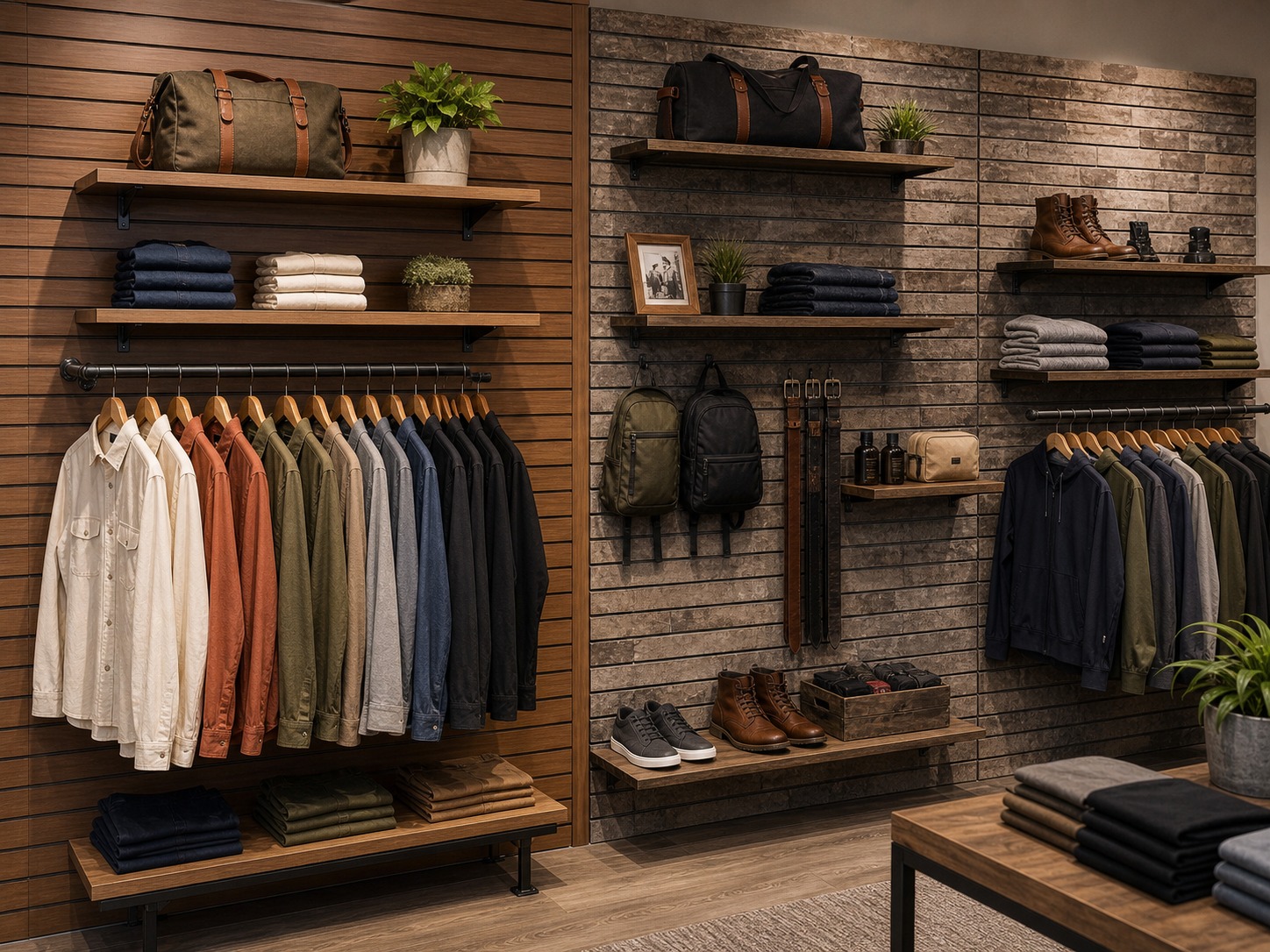
For high-end boutiques, flagship stores, and displays where the surface needs to hold up under close customer inspection, veneer slatwall is worth evaluating closely. For stores that want atmosphere, visual impact, or a specific finish story, textured slatwall usually offers more finish options. This guide explains the practical difference, which store types suit each, and what to confirm before ordering.
Why Veneer Slatwall Matters for Retail Buyers
A strong fixture decision starts with the merchandise, not the wall finish. For high-end boutiques, jewelry-adjacent retailers, flagship stores, lifestyle stores, and specialty retail showrooms, the display must hold product securely, match the store identity, and remain practical for daily staff use.
Veneer slatwall is appropriate when the store needs a wall surface that reads as premium and refined under close inspection — for product categories including premium apparel, accessories, jewelry-adjacent display, curated gifts, samples, and feature merchandise. A veneer panel has to handle daily customer interaction, regular inventory changes, and consistent display maintenance, not just look good in a planning presentation.
RDUSA's veneer slatwall section and the broader textured slatwall line are the main comparison points here. Buyers should compare finish direction, wall role, and merchandising needs rather than relying on template category wording.
Product Selection and Fixture Planning
Choosing veneer slatwall should involve product size, store layout, customer handling, staff restocking, and the visual role of the fixture. A feature display near the entrance may need a different finish than a utility wall in the back. Use the product category page as the starting point, then confirm the details that affect real use: dimensions, finish, substrate material, compatibility, and maintenance.
Veneer Slatwall vs Textured Slatwall
Veneer slatwall and textured slatwall can both create a more premium wall than a plain panel, but they solve different design problems.
Veneer slatwall panels are typically chosen when the store wants a refined, wood-oriented finish that reads as closer to real wood than an embossed or printed pattern. A high-end boutique or flagship wall may use veneer when the surface needs to feel restrained and polished under close inspection.
Textured slatwall is typically chosen when the store wants more surface character — barnwood, brick, wood grain, color finishes. A gift shop, lifestyle store, or visual feature wall often benefits from textured panels because the surface adds immediate atmosphere that a subtler veneer finish may not.
Neither choice should be made on appearance alone. Confirm accessory compatibility, panel weight, wall anchoring requirements, cleaning method, and how the finish holds up under normal retail handling before finalizing the order.
Planning Before You Order
Before ordering, measure the wall area and identify which products must be displayed every day. Retailers often make planning mistakes when they work from an empty wall rather than from actual merchandise. Product size, package depth, customer handling frequency, and restocking requirements should all drive the fixture choice.
For a wall display, note available width, height, and aisle clearance. If the display supports seasonal products, choose a configuration that can be adjusted without requiring a full store reset. Also consider installation requirements — some higher-end panel finishes may have different wall anchoring or installation considerations compared to standard panels.
Best Store Uses for Veneer Slatwall
Veneer slatwall tends to perform best in retail environments where shoppers spend time close to the wall and where the surface finish contributes to perceived product value. High-end boutiques can use veneer for primary apparel walls or a main feature wall, where the refined surface makes folded goods, accessories, and featured merchandise feel more considered. Flagship stores and showrooms benefit when the fixture finish reinforces a premium or designer brand position. Jewelry-adjacent retailers and lifestyle specialty stores can use veneer to create a wall finish that reads as permanent and intentional rather than decorative.
For stores that need maximum flexibility, high seasonal product turnover, or a bolder visual statement, textured slatwall will often give more options at a more accessible price point.
Common Buying Mistakes to Avoid
One common mistake is choosing a finish based only on appearance in a photograph. Veneer surfaces behave differently under different lighting conditions and at different viewing distances. Evaluate the finish in the store's actual lighting environment before ordering.
Another mistake is overloading a veneer display. If the goal is to use the wall surface as part of the store's premium presentation, keep enough of the panel visible between product groups. A wall buried under too many accessories loses the finish value it was chosen for.
A third mistake is not confirming accessory compatibility. Veneer panels use slatwall grooves, but buyers should verify groove pitch, accessory fit, and weight ratings before ordering the full accessory package.
Build the Right Display With RDUSA
Retailers planning veneer slatwall can start with Retail Display USA's veneer slatwall category and compare related fixture options based on store layout, product mix, and brand direction.
For a complete plan, review the supporting RDUSA categories: textured slatwall, barnwood slatwall, and wood textured slatwall. The best result comes from treating the wall, floor fixtures, accessories, and merchandising goals as one system.
FAQ
What is veneer slatwall?
Veneer slatwall is a slatwall display panel with a real or simulated wood veneer surface applied over a substrate. It gives the wall a refined, surface-close-to-real-wood look that reads as more understated than embossed or printed textured panels.
How is veneer different from textured slatwall?
Textured slatwall uses an embossed or surface-treated finish to create physical or visual depth — barnwood, brick, wood grain, or color effects. Veneer slatwall uses a wood-surface material that reads as more subdued and premium under close inspection. Textured panels are often better for stores that need atmosphere and immediate visual character. Veneer is typically better for stores that need the wall to look permanent and refined without being decorative.
Which finish looks more premium?
That depends on the store and shopper. Veneer panels often read as more premium under close inspection because the surface material has more depth than a printed or embossed finish. In a high-end boutique or flagship store, that can justify the choice and the cost. For stores where shoppers move quickly or where the wall needs to create immediate atmosphere from a distance, textured slatwall may have more impact. Neither is universally more premium — the right choice depends on the product category, the store aesthetic, and how closely customers interact with the wall.
Can veneer and textured panels be used together?
Yes. A store might use veneer slatwall on a premium feature wall or main product wall, and textured slatwall in adjacent or supporting areas. Combining finish types can define departments, separate premium zones from utility areas, or add visual variety without making the store feel inconsistent. Confirm that both panel types use compatible groove specifications before ordering accessories that need to work across both surfaces.
How should retailers choose veneer slatwall?
Choose veneer slatwall when the store needs a wall finish that feels restrained, permanent, and closely related to real wood rather than a decorative pattern. It suits high-end boutiques, flagship store walls, showrooms, and any retail environment where shoppers inspect the display surface closely. Confirm material, groove compatibility, accessory fit, and finish durability under retail conditions before ordering.
Retail Planning Resource
For broader retail planning context, the National Retail Federation publishes retail industry research and store operations insights that can help store owners connect fixture decisions with shopper behavior.