
Slatwall Wire Shelves vs Wood Shelves for Retail
Slatwall wire shelves vs wood shelves is a choice between lighter visual structure and a warmer solid merchandising surface. Wire shelves often fit packaged goods, utility displays, and products where airflow or reduced visual mass helps. Wood shelves often fit folded apparel, gifts, footwear, and stores where the shelf finish contributes to the presentation. Product dimensions and the exact shelf system should decide.
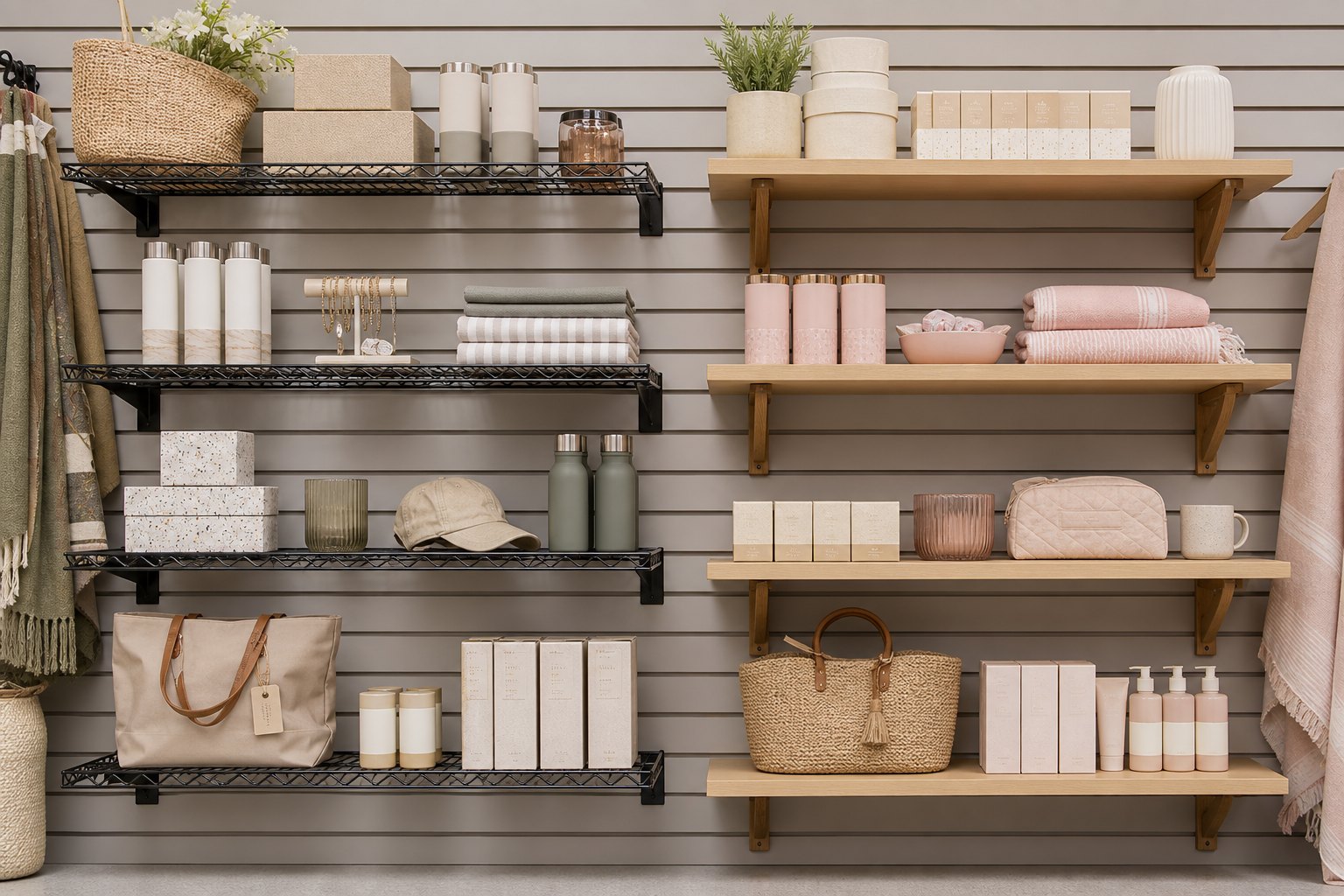
RDUSA's slatwall shelves category currently includes wire, wood, metal, and other shelf directions. Confirm dimensions, brackets, compatibility, load-sensitive use, and included components for the exact product.
Wire vs Wood Shelves at a Glance
| Decision factor | Wire shelves | Wood shelves |
|---|---|---|
| Visual effect | Open, lighter, utility-oriented | Solid, warm, furniture-like |
| Strong product fit | Packaged goods, baskets, utility items | Folded apparel, gifts, footwear, lifestyle goods |
| Product support | Open grid may need product-aware spacing | Continuous surface supports varied footprints |
| Brand direction | Industrial, practical, lightweight | Boutique, natural, premium, traditional |
| Main risk | Small products may sit poorly on an open surface | Solid shelves add more visual mass to the wall |
When Wire Shelves Work Best
Wire shelves create an open surface that can feel visually lighter than a solid shelf. They are useful when the wall should remain airy or when the merchandise already comes in stable packages, bins, or baskets.
Wire shelves can suit:
- packaged accessories
- convenience products
- sporting-goods add-ons
- utility or stock-forward displays
- baskets and products with stable bases
The open structure can make a dense display feel less heavy. It can also create support problems for very small, narrow, or soft products, so test real merchandise.
When Wood Shelves Work Best
Wood shelves create a continuous surface and a warmer presentation. RDUSA currently lists multiple wood shelf sizes within its slatwall shelf category.
Wood shelves can suit:
- folded apparel
- gift and home products
- footwear and accessories
- books or boxed lifestyle goods
- boutique feature displays
The shelf becomes a visible part of the store design. Its color and edge profile should coordinate with the slatwall, fixtures, tables, and merchandise.
Compare Product Footprint
Product footprint is more important than category labels. A stable box may work on wire or wood. A small bottle, narrow package, soft item, or object with feet may require a continuous surface.
Measure:
- product width and depth
- base shape
- tendency to tip
- package edges
- desired number of facings
- customer handling
Build a short loaded sample before ordering a wall of shelves.
Compare Visibility
Wire can reveal more of the wall behind the product, which may help a textured or branded surface remain visible. That openness can also create a busier pattern when packaging, wire, grooves, and price labels overlap.
Wood creates a clearer horizontal line. It can organize a wall and give products a stronger platform. Too many heavy-looking wood shelves can make a small wall feel crowded.
Use fewer shelves with better spacing rather than filling every groove.
Compare Store Style
Wire usually supports:
- industrial interiors
- utility displays
- modern open fixture systems
- high-density packaged merchandise
Wood usually supports:
- boutique environments
- natural or heritage interiors
- warmer lifestyle stores
- premium product stories
These are design tendencies, not hard rules. A black wire shelf can look refined in a boutique, and a clean wood shelf can work in a modern store.
Brackets, Depth, and Compatibility
The shelf surface is only part of the system. Bracket depth, panel compatibility, wall support, product projection, and installation determine whether the display is suitable.
RDUSA lists shelf products and separate bracket directions in the category. Confirm whether the selected shelf includes brackets, which bracket length it requires, and how the complete assembly fits the slatwall.
Do not infer capacity from material alone. A steel or wood shelf is not automatically suitable for every load or projection.
Cleaning and Daily Operations
The right cleaning approach depends on the exact shelf finish, product type, and how staff reset the display. Crumbs, dust, tags, and small items may pass through wire. A solid shelf may be faster to wipe but can show dust or abrasion differently.
Ask:
- how often products are reset
- whether loose items are displayed
- whether staff need fast wipe-downs
- whether labels attach to the front edge
- whether shelf liners or trays are needed
Use product-specific care instructions rather than a universal cleaning rule.
Combine Shelves Strategically
Many walls benefit from both. Wire can hold utility products or baskets, while wood creates feature shelves for premium goods. Keep the finish and spacing consistent enough that the wall still feels planned.
A useful hierarchy is:
- eye-level wood shelf for feature merchandise
- supporting wire shelves for packaged add-ons
- hooks or faceouts for hanging products
Review the wider slatwall accessories range as one merchandising system.
Common Buying Mistakes
- choosing shelf material before testing the product base
- ignoring bracket and compatibility requirements
- using too many shelves on a small wall
- assuming material determines load capacity
- mixing finishes without a visual plan
- forgetting labels, replenishment, and cleaning
Buyer Checklist
Prepare:
- product dimensions and base shape
- expected product quantity per shelf
- shelf width and depth preference
- slatwall panel and insert details
- bracket questions
- finish and store-style direction
- wall dimensions and shelf spacing
- quantities and delivery location
Use Samples & Quotes for a coordinated shelf and accessory request.
Frequently Asked Questions
Are wire shelves better for packaged goods?
Often, especially when packages have stable bases. Test small or narrow packages to ensure the open surface supports them.
Are wood shelves better for boutiques?
They often add warmth and a furniture-like presentation, but the best choice depends on the store style and merchandise.
Can wire and wood shelves be mixed?
Yes. Use each for a defined merchandising role and coordinate spacing and hardware finishes.
Are brackets included?
Do not assume they are. Confirm included components on the exact product page or quote.
Which shelf holds more weight?
Capacity depends on the complete shelf, bracket, panel, support, installation, and product projection. Use product-specific guidance.
Final Recommendation
Choose wire shelves when open structure, utility, and packaged-goods presentation support the wall. Choose wood shelves when a solid platform and warmer visual finish strengthen the product story. Test the real merchandise, then confirm shelf dimensions, brackets, compatibility, and freight.
Compare current wire and wood slatwall shelves, then submit product dimensions and quantities through Samples & Quotes.
Shelf Planning Resource
For broader retail planning context, the National Retail Federation publishes retail research and store-operation resources for retailers.