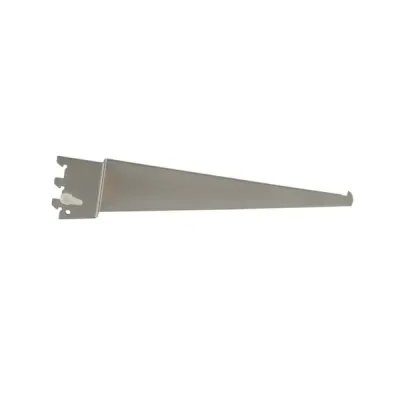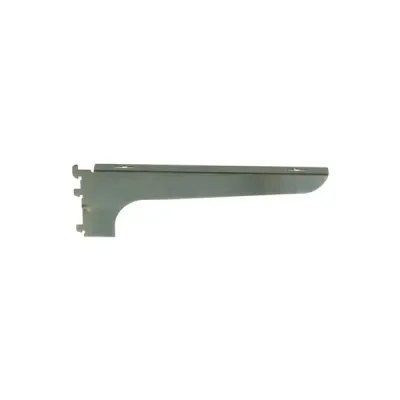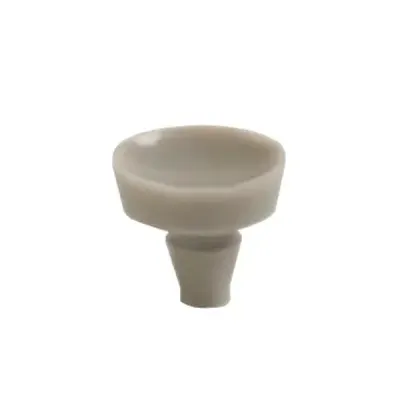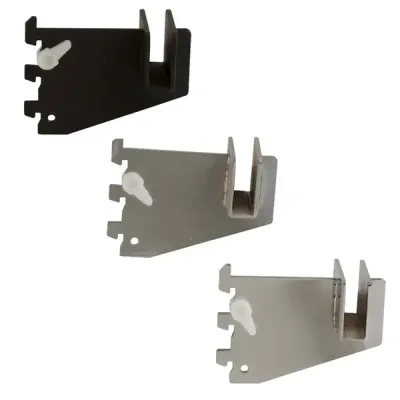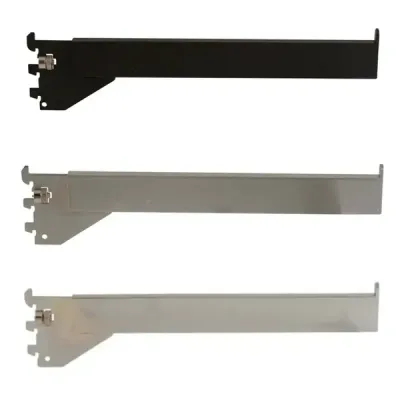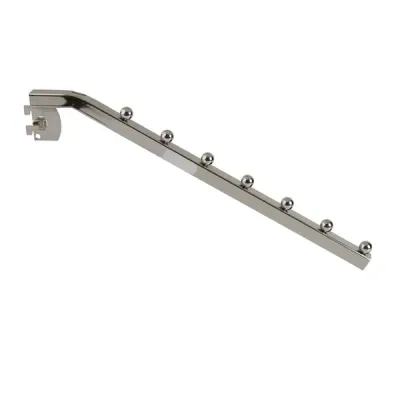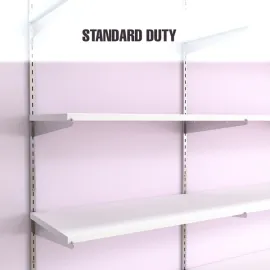
- Hardware
- Standards
Standards
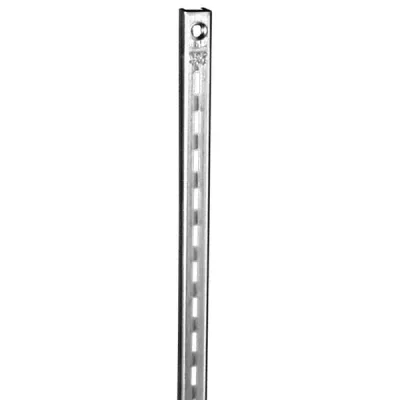
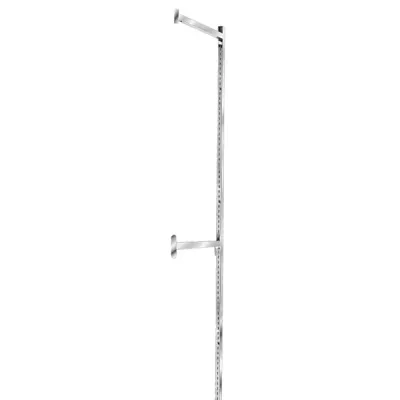
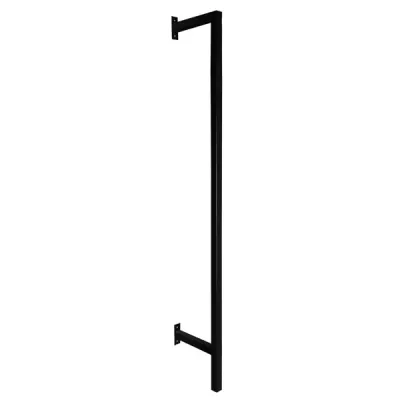
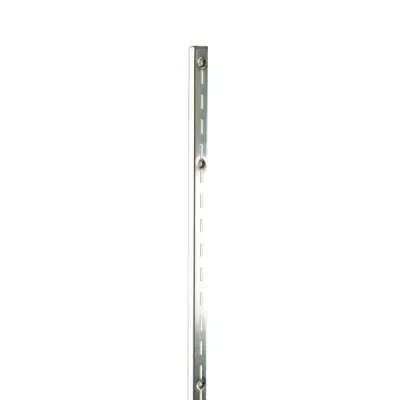
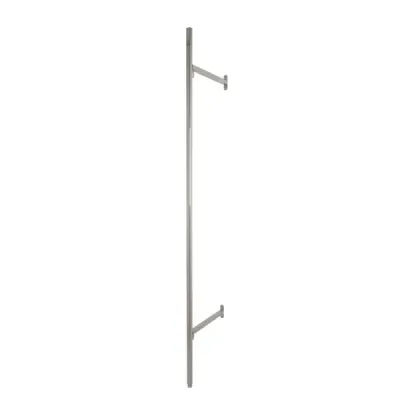
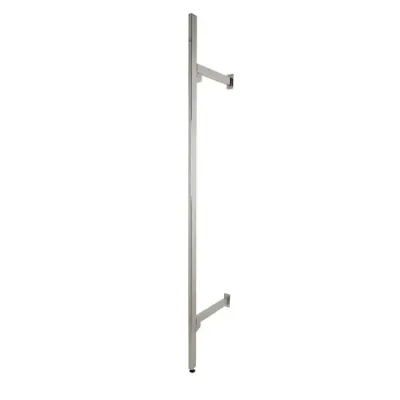
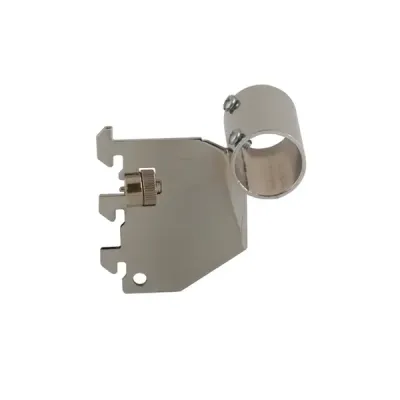
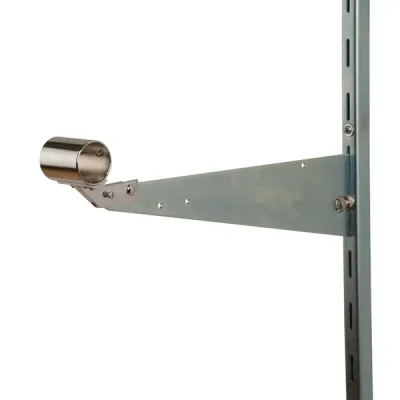
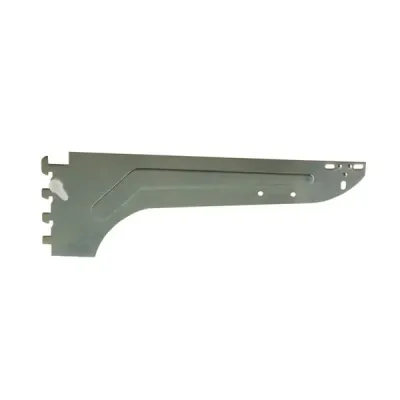
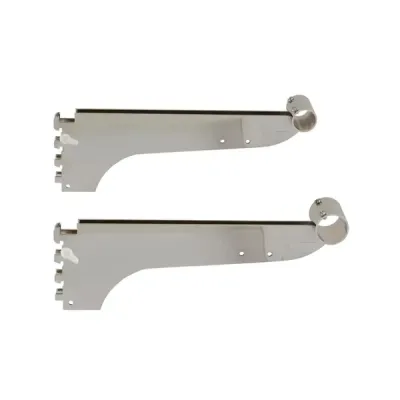
Wall standards for retail display turn empty perimeter walls into fully productive merchandising space. This collection covers standard duty, heavy duty, and super duty slotted wall standards — the vertical metal strips that mount to or recess into the wall and accept brackets, hangrails, faceouts, and shelving accessories at any height. Wall standards are the foundation of every perimeter wall display system in retail. Without them, nothing else on the wall holds position under load.
Standard Duty, Heavy Duty, Super Duty: Choosing the Right Wall Standard
Three duty ratings cover the full range of retail merchandising loads. Standard duty wall standards handle lightweight merchandise displays — folded goods, light accessories, and packaged items on brackets and hangrails at moderate stock weights. Heavy duty standards carry heavier loads — denser merchandise categories, fuller garment runs, and any application where standard duty deflects under the weight of a fully stocked display. Super duty standards handle the heaviest retail merchandising demands — outerwear, denim, footwear on shelves, and any high-volume wall display where load capacity is the primary specification.
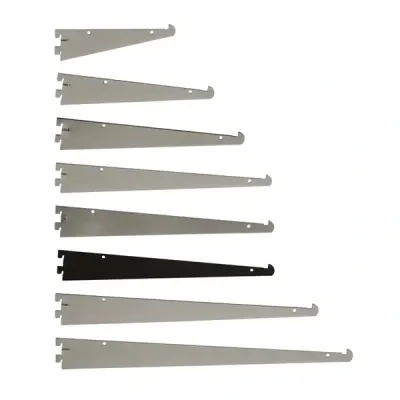
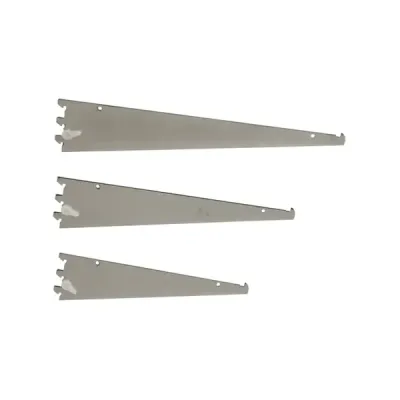
The slot spacing differs across duty ratings. Standard and heavy duty use 1/2" slots on 1" centers — the most common slot format in US retail. Super duty uses 1" slots on 2" centers. Accessories are specific to each system — a bracket made for 1" slot spacing does not fit a 1/2" slot standard. Confirm the duty rating and slot spacing of the existing wall standard installation before ordering accessories or additional standards.
Surface Mount vs Recessed Standards
Two installation styles are available across this collection. Surface mount standards attach directly to the wall face — the full standard body is visible on the wall surface. Recessed standards install behind a finished wall board so only the slots are visible at the wall face. Recessed standards create a cleaner, more finished wall appearance — the standard disappears into the wall and the bracket or shelf appears to float from the slot. Surface mount standards are easier to install and suit unfinished wall environments, back room displays, and any installation where wall finish aesthetics are secondary to function.
Both styles accept the same compatible accessories within their respective duty rating. The installation method is the only difference — function, load capacity, and slot compatibility are determined by the duty rating, not the mount style. For more on perimeter wall display systems in retail, see the Wikipedia overview on visual merchandising.
Frequently Asked Questions
What are wall standards used for in a retail store?
Wall standards are vertical slotted metal strips mounted to the perimeter walls of a retail store. Brackets, hangrails, faceouts, and shelf supports insert into the standard slots at any height to create a fully adjustable wall display. Changing the bracket height changes the shelf or hangrail position without removing or reinstalling any hardware — insert, adjust, and the display changes in seconds. That adjustability makes perimeter wall standards the most flexible wall display system in retail.
What is the difference between standard duty and heavy duty wall standards?
Both standard and heavy duty versions use 1/2" slots on 1" centers and accept the same slot-compatible accessories within their respective product lines. The material thickness and load capacity differ. Standard duty handles light to moderate merchandise loads. Heavy duty handles heavier merchandise and higher-volume stocking at each bracket position. Choose standard duty for lighter merchandise categories. Choose heavy duty when the wall display carries dense garment runs, heavy folded goods, or other high-weight merchandise consistently throughout the trading day.
Can I mix standard and heavy duty standards on the same wall?
Within the same slot spacing system, accessories are compatible across standards. However, mixing duty ratings on the same continuous wall run creates inconsistent load capacity at different upright positions — a heavy duty standard next to a standard duty unit creates a weak point where the lighter standard deflects under loads the heavier one handles without issue. For consistent wall performance, use the same duty rating throughout a continuous wall run. Contact us before ordering if your installation requires mixing duty ratings at specific positions.
Browse all wall standard products above, or Call (800) 420-1457 for help choosing the right duty rating and slot system for your store. See all hardware in our hardware collection.