
Gridwall vs Slatwall: Which Retail Wall Display System Is Right for Your Store?
Gridwall vs slatwall is usually a store planning decision, not just a wall panel decision. Both systems can hold merchandise, but they create very different store environments. Gridwall is open, fast to reconfigure, and useful when a retailer needs hook-heavy product capacity. Slatwall gives the wall a more finished surface and works well when the store needs shelves, faceouts, hangrails, or a more designed backdrop.
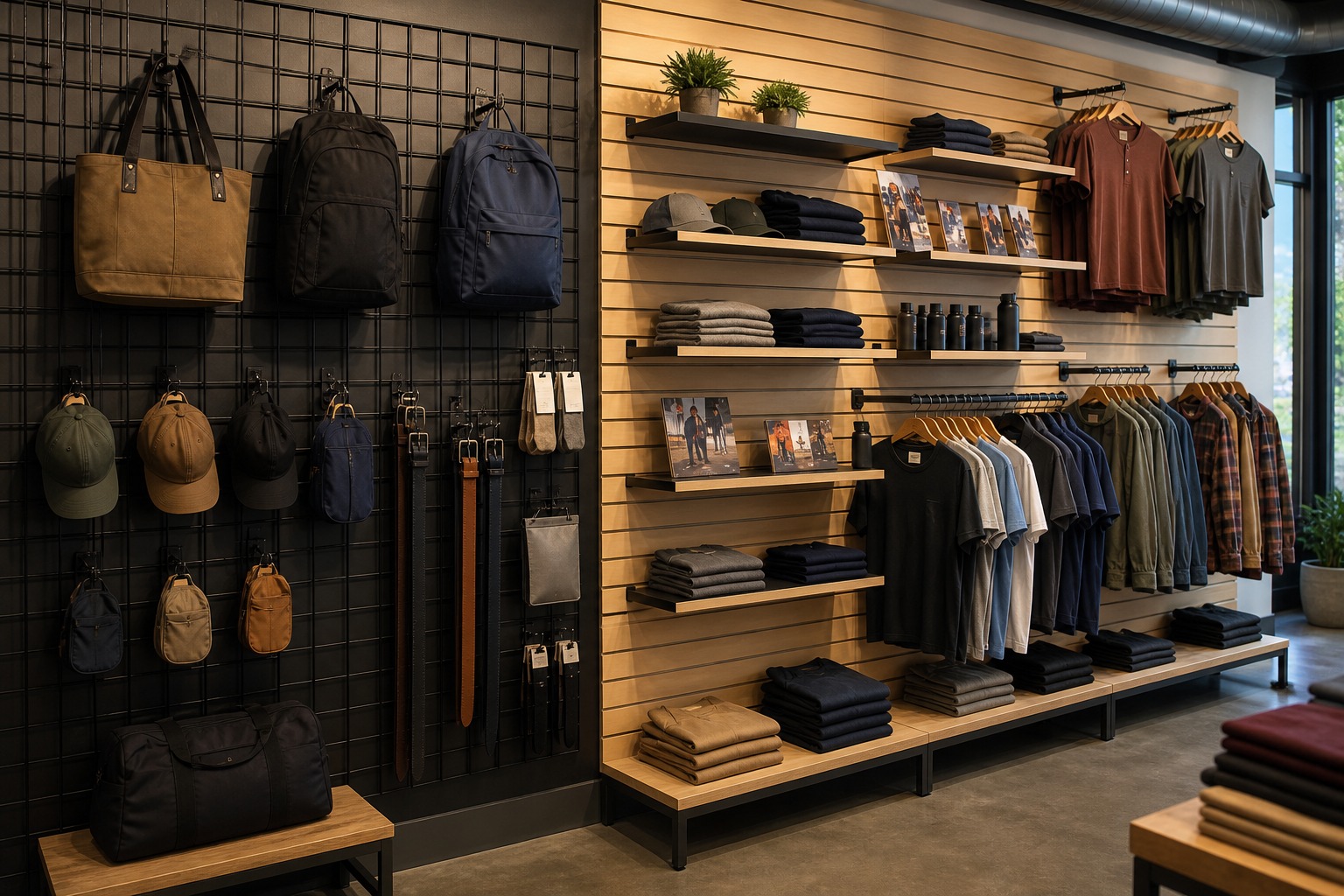
Retailers comparing the two should start with the product mix. A hardware store with packaged parts has different needs than a boutique selling apparel and handbags. A gift store with many small categories has different needs than a showroom that wants a polished wall presentation. Retail Display USA carries gridwall panels, slatwall panels, textured slatwall, and related slatwall accessories. The best choice depends on how the wall will be used every day.
The Practical Difference
Gridwall is a wire grid panel system. Products hang from hooks, baskets, shelves, or other grid-compatible accessories. It is commonly used when the store needs a high-change wall, a temporary display, or a practical way to hang many packaged products.
Slatwall is a grooved wall panel system. Accessories lock into the horizontal grooves, giving the retailer a cleaner wall surface. Standard slatwall can look simple and functional, while textured or specialty panels can make the wall part of the store design.
The difference is clear in a working store. Gridwall works well when products are the focus and the fixture should stay visually light. Slatwall works well when the wall itself needs to look finished and intentional.
How to Choose Based on the Merchandise
Start with how products are packaged and handled. If most products are peg-hung, small, frequently changed, or sold from lightweight packages, gridwall may be the simpler and more practical choice. If products need shelves, forward-facing apparel presentation, or a cleaner store wall, slatwall usually gives more control.
For apparel retailers, slatwall can support hangrails, faceouts, shelves, and feature displays on one wall. Gridwall can still work for accessories, sale areas, or temporary apparel runs, but it usually feels less built-in. For gift stores, slatwall shelves help boxed products and candles sit cleanly, while gridwall can handle small hanging goods and impulse items. For hardware or convenience stores, gridwall can be practical when the wall needs many hooks and quick product changes.
Before ordering either system, confirm accessory compatibility, product weight, wall attachment requirements, and the type of display the store genuinely needs.
Side-by-Side Comparison
| Decision Factor | Gridwall | Slatwall | Buyer Takeaway |
|---|---|---|---|
| Cost | Often practical for budget-conscious or temporary displays | Can cost more depending on panel finish, inserts, and installation | Gridwall may win for temporary or utility areas; slatwall may justify the cost for a finished sales wall |
| Flexibility | Easy to move, reset, and use for changing product groups | Flexible through accessories, but panels feel more permanent once installed | Gridwall is stronger for frequent resets; slatwall is stronger for planned store walls |
| Appearance | Open wire look that stays visible | Clean panel surface available in standard, textured, wood-look, and specialty finishes | Slatwall usually looks more finished; gridwall reads as more utilitarian |
| Capacity | Strong for hook-heavy packaged goods and dense displays | Strong for mixed displays using shelves, hooks, hangrails, and faceouts | Gridwall suits many small hanging products; slatwall suits mixed presentations |
| Installation | Can be wall-mounted or used in freestanding configurations | Usually planned as a wall panel installation or built fixture surface | Slatwall needs more wall planning; gridwall may be easier for simpler setups |
| Best Store Types | Hardware, convenience, markets, sporting goods add-ons, temporary retail | Boutiques, gift shops, apparel, showrooms, specialty retail, permanent walls | Choose based on product mix and the store's intended visual finish |
When Gridwall Wins
Gridwall is often the better choice when speed, adjustability, and hook capacity matter most. A hardware store with small packaged parts can use gridwall to create dense, easy-to-change product sections. A sporting goods store might use gridwall for packaged accessories, protective gear, or seasonal add-ons. A convenience store can use gridwall for small products near checkout, especially when staff need to rotate inventory quickly.
Gridwall also suits temporary retail. Pop-up shops, market sellers, and event vendors often prefer grid panels because the layout can change without committing to a permanent wall finish. If the fixture needs to move, fold, or support short-term merchandising, gridwall deserves serious consideration.
The tradeoff is presentation. Gridwall rarely looks as finished as a slatwall wall. That may not matter in a utility area, but it matters in a boutique, showroom, or gift shop where the wall contributes to perceived quality.
When Slatwall Wins
Slatwall wins when the wall needs to look intentional and carry different product types at the same time. A boutique can use slatwall for faceouts, shelves, hangrails, and small accessories without changing the wall surface. A gift shop can use shelves for candles and boxed goods, hooks for packaged items, and sign holders for category labels.
Slatwall also gives retailers more control over the wall's appearance. A store can use plain panels for a clean background, or choose textured slatwall when the wall needs more character. Barnwood, brick, wood-look, and specialty finishes can reinforce a store concept in a way gridwall cannot.
The tradeoff is planning. Slatwall should be measured, installed, and accessorized with the product mix in mind. It is not the right choice when the retailer needs a temporary, highly portable, or purely utility-style display.
Store-Type Decision Matrix
| Store Type | Better Starting Point | Why |
|---|---|---|
| Boutique | Slatwall | Better for a finished wall, apparel presentation, shelves, faceouts, and coordinated accessories |
| Gift store | Slatwall, with possible gridwall support | Shelves and hooks work well for mixed gift products; gridwall can support small hanging add-ons |
| Hardware store | Gridwall | Strong fit for packaged goods, high-change inventory, and hook-heavy walls |
| Convenience store | Gridwall | Practical for impulse products, small packaged goods, and quick resets |
| Apparel retailer | Slatwall | Supports hangrails, faceouts, shelves, outfit stories, and a cleaner wall presentation |
| Specialty retailer | Depends on product mix | Use gridwall for dense hanging products; use slatwall for a more finished sales wall |
| Sporting goods store | Gridwall for accessories, slatwall for apparel | Gridwall handles packaged gear; slatwall presents apparel and feature products |
| Showroom | Slatwall | Cleaner surface for samples, product comparisons, and a more permanent brand presentation |
Accessory Compatibility Matters
Gridwall accessories and slatwall accessories are not automatically interchangeable. Gridwall hooks, baskets, and shelves attach to the wire grid. Slatwall accessories fit into panel grooves. A buyer should confirm the accessory family before ordering.
This matters even more when expanding a store. A retailer that starts with gridwall and later adds slatwall may need a separate accessory order. A store that already owns slatwall accessories should not assume those parts will fit grid panels.
Layout Planning Before Ordering
Measure the wall before choosing a system. Note wall width, height, aisle clearance, traffic direction, checkout position, and which products need the most visibility. A good wall plan identifies which sections need capacity and which sections need presentation.
In many stores, the best answer is not one system everywhere. A boutique might use slatwall on the main feature wall and gridwall in a back accessory area. A sporting goods store might use gridwall for packaged gear and slatwall for apparel or branded feature displays.
Common Buying Mistakes
The first mistake is choosing by price alone.
The second mistake is ignoring product depth and product type.
The third mistake is ordering accessories after the panels arrive instead of planning them at the same time.
Build the Right Wall Display
Retailers comparing gridwall vs slatwall can start with gridwall panels and slatwall panels, then compare the accessory and finish options that fit the store.
For a more finished wall, review textured slatwall. For hooks, shelves, hangrails, faceouts, and related hardware, review slatwall accessories. The right choice should match the merchandise, not just the available wall space.
FAQ
Is gridwall or slatwall better for a boutique?
Slatwall is usually the better starting point for a boutique because it looks more finished and works well with shelves, faceouts, hangrails, and styled product groupings.
Is gridwall or slatwall better for a gift store?
For gift stores, slatwall is often stronger for the main sales wall because shelves can hold candles, boxed goods, local products, and seasonal gifts in an organized way. Gridwall can support smaller hanging products and packaged add-ons.
Which system holds more weight?
Weight capacity depends on the specific panels, accessories, mounting method, wall structure, and product load. Confirm manufacturer ratings for the specific components before placing heavy merchandise on the wall.
Can gridwall and slatwall be used in the same store?
Yes. Many stores use slatwall where appearance matters most and gridwall where quick changes or hook-heavy displays matter most.
Are gridwall accessories and slatwall accessories interchangeable?
Generally no. Gridwall accessories attach to wire grid panels, while slatwall accessories fit into slatwall grooves. Buyers should verify compatibility before ordering.
What is the biggest reason to choose slatwall over gridwall?
Choose slatwall when the wall needs to look permanent, branded, or more finished while still supporting a mix of accessories.
What is the biggest reason to choose gridwall over slatwall?
Choose gridwall when the store needs a practical, adjustable, hook-heavy display for packaged goods, temporary retail, or utility areas where a finished wall surface is less important.
Retail Planning Resource
For broader retail planning context, the National Retail Federation publishes retail industry research and store operations insights that can help store owners connect fixture decisions with shopper behavior.