
How to Choose Aluminum Slatwall for Retail Displays
Aluminum slatwall is a material choice, not just a finish option. Where standard slatwall panels use an MDF or wood-composite core, aluminum slatwall is built from a metal construction that changes the panel's load characteristics, durability in challenging environments, and long-term commercial performance. Retailers who choose it are typically working with higher product loads, moisture-exposed environments, food retail areas, commercial showrooms, or any application where standard panels would be undersized for the job.
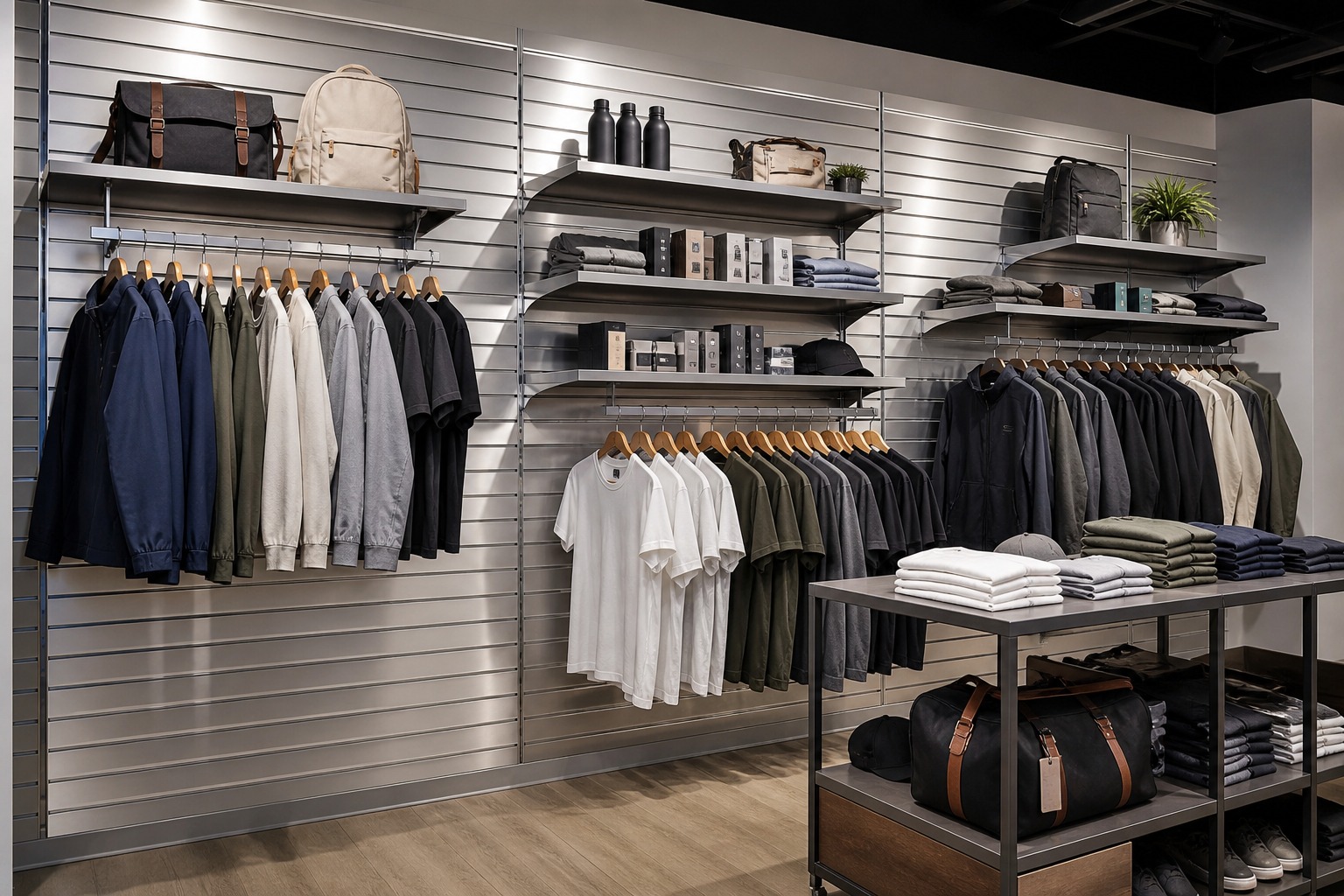
Retail Display USA carries aluminum slatwall and aluminum slatwall panels. This guide explains where aluminum makes sense, what to check before ordering, and how it compares to standard slatwall in a real retail environment.
Why Aluminum Slatwall Matters for Retail Buyers
A strong fixture decision starts with the application, not the material. For modern retail stores with higher load requirements, food retail areas, commercial showrooms, hardware-style retailers, and high-use wall display environments, aluminum construction offers practical advantages that standard panels cannot match.
The main reason to consider aluminum slatwall is durability and load performance. It supports product categories including packaged goods, tools, samples, accessories, and merchandise with above-average weight that standard slatwall shelves and hooks may not handle as reliably. In a working retail environment, the fixture has to handle daily customer interaction, regular inventory changes, and long-term commercial use without degrading.
RDUSA's aluminum slatwall section sits within the broader slatwall range and can be compared with standard slatwall and slatwall accessories when durability, finish, or environment requirements differ.
Product Selection and Fixture Planning
Choosing aluminum slatwall should involve product weight, store environment, staff restocking requirements, and the specific wall application. Aluminum is not necessary for most standard retail uses — the higher cost relative to standard slatwall is justified when the application genuinely requires it.
Use the product category page as the starting point, then confirm the details that affect real use: panel dimensions, finish options, groove specifications, compatible accessories, and the load ratings for the specific panel and mounting method.
How Aluminum Slatwall Fits With Other Fixtures
Aluminum slatwall is typically used for wall display systems in environments where standard panels would be inappropriate. The panels create vertical display space, while floor fixtures nearby carry featured merchandise or create a customer path. In a food retail or commercial showroom environment, the wall may carry packaged goods, samples, or specialty merchandise while display tables or counters handle primary products.
In hardware-style or commercial showroom settings, aluminum slatwall panels can work alongside gridwall for areas with high hook density, while the aluminum panels handle areas requiring shelves or heavier accessories. The combination gives the store different display tools for different product requirements in the same space.
Planning Before You Order
Before ordering, confirm the actual wall environment and product load requirements. Retailers sometimes choose aluminum for appearance reasons without confirming that the higher cost is justified by the application. If the store sells standard retail merchandise on a normal interior wall, standard slatwall panels are usually sufficient.
For environments that genuinely benefit from aluminum — food retail, moist areas, heavy commercial use, or high-load accessory applications — note the wall dimensions, aisle clearance, and the heaviest products that will be on the wall before specifying panel gauge and accessory requirements.
Also confirm installation requirements. Aluminum panels may have different mounting hardware requirements than standard panels, and the wall structure needs to support the panel system being planned.
Best Store Uses for Aluminum Slatwall
Aluminum slatwall performs best in specific commercial applications rather than general retail. Food retail environments benefit from aluminum's resistance to moisture that would degrade MDF-core panels over time. Hardware-style retailers, tool stores, and commercial suppliers often use aluminum for high-hook-density walls carrying packaged goods with significant weight. Commercial showrooms and display environments sometimes prefer aluminum for the longevity and commercial finish quality it provides.
Most general boutiques, gift shops, and apparel stores do not need aluminum slatwall — standard panels are suitable and more cost-effective for those applications. If the store is in a normal interior environment selling standard retail merchandise, start with the standard slatwall category. If the specific use case involves moisture, very heavy product loads, or long-term high-use commercial environments, aluminum is worth evaluating seriously.
Common Buying Mistakes to Avoid
One common mistake is choosing aluminum slatwall when standard panels would perform equally well. The higher material cost is only justified by the specific application — not by a preference for metal aesthetics alone.
Another mistake is assuming that aluminum panels accept all standard slatwall accessories without checking compatibility. Groove specifications may vary by panel line, and accessories designed for standard MDF slatwall may not fit aluminum channels correctly.
A third mistake is not confirming the wall structure before ordering. Heavier aluminum panels may have different installation requirements and may place more demand on the wall structure than standard panels.
Build the Right Display With RDUSA
Retailers evaluating aluminum slatwall can start with Retail Display USA's aluminum slatwall category and compare related fixture options based on the specific application and environment.
For a complete plan, review the supporting RDUSA categories: aluminum slatwall panels, standard slatwall, and slatwall accessories. The best result comes from matching the panel material to the actual commercial requirements rather than selecting based on appearance alone.
FAQ
Is aluminum slatwall stronger than standard panels?
Aluminum slatwall typically offers higher load tolerance than MDF-core standard slatwall panels, but exact load ratings depend on panel gauge, extrusion construction, and mounting method. Confirm manufacturer load ratings for the specific RDUSA aluminum panel before placing heavy merchandise. Standard slatwall is sufficient for most retail uses — aluminum is worth evaluating when the product load, environment, or display life expectancy is significantly higher than typical retail conditions.
Can aluminum slatwall be used in humid areas?
Aluminum construction avoids the moisture sensitivity of MDF-core slatwall, making it a better candidate for food retail areas, outdoor-adjacent spaces, or any environment where moisture exposure is a genuine concern over time. Confirm the specific panel's environmental ratings and finish specs for the intended environment before ordering.
What accessories fit aluminum slatwall?
Accessory compatibility with aluminum slatwall should be confirmed before ordering. The groove channel in aluminum panels may or may not match the groove pitch of standard slatwall accessories depending on the specific panel line. RDUSA carries slatwall accessories for its panel range — verify specific fit and compatibility before assuming cross-compatibility with standard accessories.
Does aluminum slatwall look too industrial?
Not necessarily. The finish options available on aluminum slatwall — which may include anodized or powder-coat finishes — affect how the wall reads in a retail environment. A polished or satin anodized surface can look clean and modern rather than utilitarian. Evaluate finish options in the context of the store's product mix and aesthetic before deciding based on appearance alone.
How should retailers choose aluminum slatwall?
Choose aluminum slatwall when the application genuinely requires it: higher product load requirements, moisture-exposed environments, food retail areas, commercial showrooms, or long-term high-use commercial applications. For standard retail environments with typical product loads and interior walls, standard slatwall panels are usually sufficient and more cost-effective. If there is a genuine reason to consider aluminum, start with the aluminum slatwall category and confirm specs before ordering.
Retail Planning Resource
For broader retail planning context, the National Retail Federation publishes retail industry research and store operations insights that can help store owners connect fixture decisions with shopper behavior.