
How to Display T-Shirts in a Retail Store
How to display t-shirts effectively: show the strongest graphics face-forward, keep the sellable size inventory directly below or beside each sample, and use tables or mobile fixtures for coordinated collections. This gives shoppers a fast visual choice and a clear route to the correct size without turning the selling floor into storage.
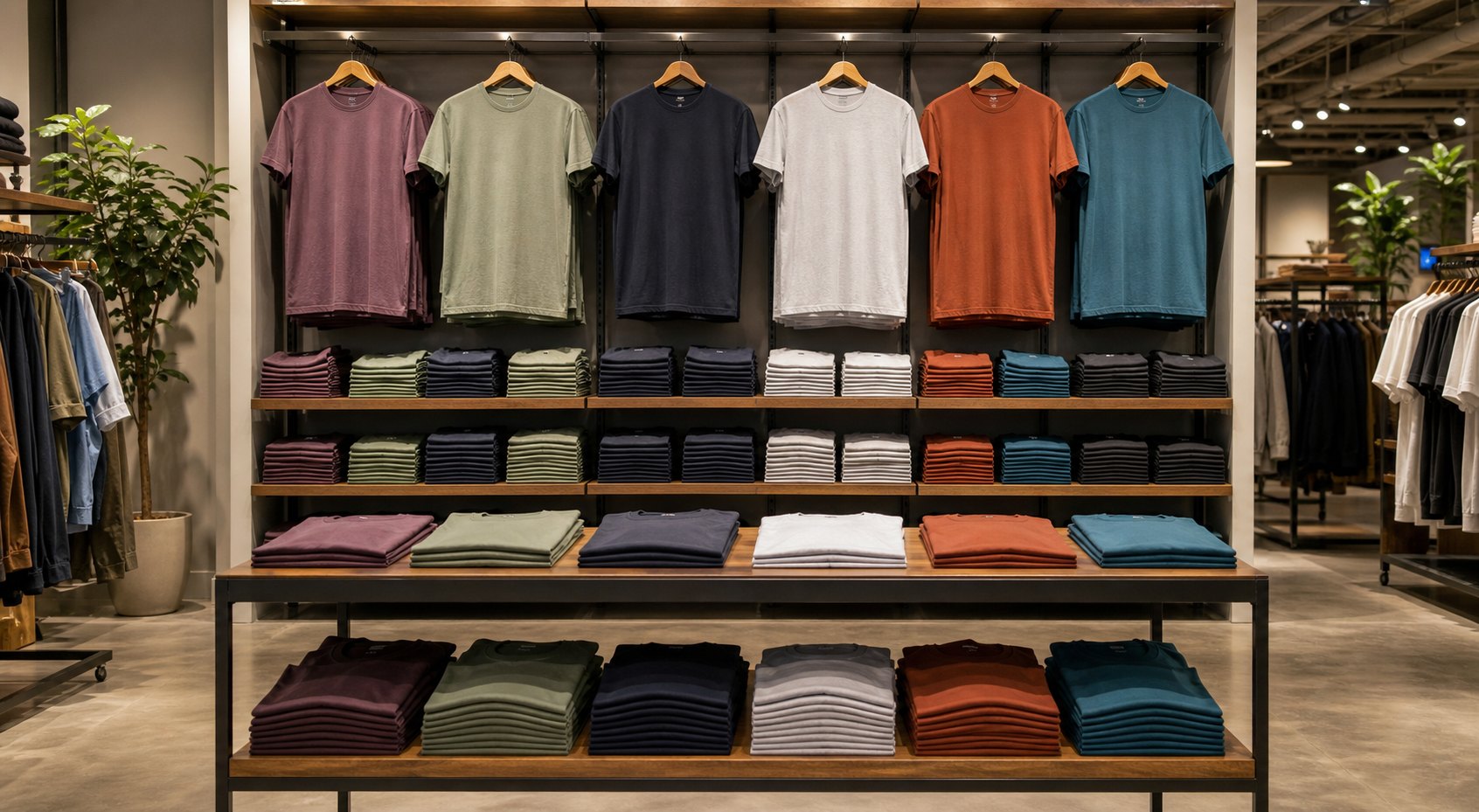
This guide is for store owners, merchandisers, and fixture buyers planning t-shirt displays for apparel stores, gift shops, campus stores, tourist retailers, and boutique brands. The goal is not to force every shirt into one fixture type. It is to match each display method to the way shoppers discover, compare, and select the product.
The main question is not whether t-shirts should be folded or hung. The real question is how the store wants the shopper to discover the shirt. Some t-shirts sell because the graphic needs to be seen from a distance. Others sell because customers want to compare colors, sizes, or price quickly. The best display system reflects that buying behavior instead of forcing every shirt into the same presentation.
Start With How Shoppers Buy T-Shirts
Most shoppers scan t-shirts visually before they touch them. They look for graphics, color, fit, and brand mood. That means a good display should show the front design clearly, keep sizes organized, and make popular styles easy to restock.
Wall-facing displays work well for graphic shirts because they show the design at eye level. Folded stacks work better when a store needs density and quick size selection. Display tables create a feature zone for seasonal collections, new arrivals, or bundled outfits.
The best t-shirt presentation usually combines these formats instead of relying on only one. A store may use a wall to show the strongest graphics, a nearby table for folded inventory, and a secondary fixture to support size depth or related products. That approach feels more intentional than putting every shirt in the same format.
Match the Display to the T-Shirt Category
Not every t-shirt should be merchandised the same way. The store should decide whether the shirt is a feature item, a replenishment item, a price-driven item, or part of a coordinated collection.
Feature Graphics and New Arrivals
New designs, seasonal graphics, or premium branded shirts should usually be shown face-forward. These items need visibility more than density. One strong front-facing shirt can often sell better than a deep stack customers have to dig through.
Core Basics and Reorder Styles
If a store sells a repeat basic tee in several sizes and colors, the presentation should prioritize easy size shopping and recovery. Folded stacks or simple shelf-based runs usually work better than a dramatic wall feature.
Bundled or Coordinated Collections
Tourist stores, gift shops, campus stores, and boutique brands often sell shirts as part of a broader theme. In those cases, the t-shirt display should sit with related items such as hats, bags, accessories, or impulse products so the wall or table feels like a collection instead of a leftover inventory zone.
Use Wall Displays for Visual Impact
Wall displays are usually the strongest option for showing t-shirt artwork. A faceout, shelf, or t-shirt display fixture lets customers see the shirt without digging through a pile. Retail Display USA's t-shirt displays are a natural commercial page to support these articles because the category is built around this exact merchandising need.
Use wall displays for:
- Best sellers
- New graphics
- Local or event shirts
- Premium designs
- Coordinated color stories
If wall space is limited, show one sample shirt facing forward and keep folded inventory below or nearby.
Why Wall Displays Work
Wall displays create a faster visual read. Customers can scan color, graphic, and style from a distance. That matters in apparel, souvenir, and lifestyle retail where shirts are often impulse-influenced purchases. If the shopper cannot understand the design quickly, the display is doing extra work instead of helping the sale.
Keep the Wall Shoppable
A strong wall should not become a crowded collage. Leave enough breathing room between featured shirts. Use the wall for edited presentation, then let supporting shelves, folded stacks, or nearby fixtures carry the deeper inventory. This keeps the display attractive while still letting the store hold enough product to sell.
For retailers who want a stronger perimeter presentation instead of only folded stacks, wall display systems can also help frame a more intentional apparel wall around featured items and coordinated products.
Use Tables for Collections and Promotions
Display tables are useful when shirts are part of a larger story. A table can combine folded t-shirts with hats, bags, accessories, or impulse products. This works especially well in gift shops, college stores, resort stores, and lifestyle boutiques.
For stores building a stronger floor presentation, link the table story to retail display tables. Tables create a landing zone that shoppers naturally approach, especially when placed near the store entrance or along a main aisle.
Use Tables for Storytelling, Not Storage
The mistake many retailers make is turning the table into overflow storage. A table works best when it feels curated. Use it for a limited number of shirt designs, clean folded stacks, and a few adjacent products that strengthen the purchase. If the table is overloaded, customers read clutter instead of value.
Good Table Placements
Good locations include:
- near the front entrance for new arrivals
- at the end of a category run for a themed collection
- near fitting rooms for impulse add-ons
- in the middle of a boutique floor where the table can anchor a seasonal story
The right table placement helps a shirt display feel like part of the store plan rather than a random pile of folded apparel.
Organize by Size, Color, and Style
T-shirts are easy to disturb. That means the display system has to help staff recover the area quickly and help customers find sizes without frustration.
Use a consistent size order across every stack or shelf. Keep the same logic everywhere in the section so staff do not have to improvise each time they restock. If the store carries multiple colors of the same shirt, either keep colors blocked in clear runs or show only one front-facing example and store the rest directly below it.
For design-heavy shirts, style clarity is more important than deep stack depth. For basics, the opposite is often true. Stores should choose whether the display goal is discovery or replenishment, then build the section accordingly.
Keep Sizes Easy to Shop
A t-shirt display fails when customers cannot find their size. Use consistent size order from small to larger sizes. Keep folded stacks shallow enough to stay neat. If a design sells quickly, give it more shelf or table space instead of forcing staff to constantly recover the display.
If a style needs repeated staff attention to stay clean, that is often a sign the display is carrying too much inventory in the wrong format. Reduce stack height, shift overflow to backstock, or move one part of the assortment onto a second fixture.
Build a Better T-Shirt Zone With More Than One Fixture
Stores that sell meaningful shirt volume usually need more than one fixture type. A complete t-shirt zone may include:
- a wall feature to show the leading graphics
- a table for folded inventory and coordinated products
- a secondary display detail such as a door-style or specialty fixture for featured presentation
Retailers comparing presentation formats can also review the t-shirt cabinet display and revolving t-shirt display. The exact mix depends on the store format, but the principle is consistent: show the shirt clearly, hold inventory neatly, and make the section easy to recover. Confirm current dimensions, finishes, capacity, mobility, and assembly details on the selected product page before ordering.
Common T-Shirt Display Mistakes
Even good fixtures can underperform if the merchandising logic is weak. Common problems include:
- stacking too many sizes in one pile
- showing too many graphics at once
- using only folded stacks with no visible sample
- giving premium shirts the same treatment as low-priority basics
- overcrowding a table with unrelated add-ons
- letting the display drift away from the store's main traffic path
Most of these issues are fixable without changing the full store layout. Usually the improvement comes from editing the assortment shown on the selling floor and using the fixtures more deliberately.
How Store Type Changes the Best Display Approach
The best t-shirt setup depends on who the store serves.
Apparel and Boutique Stores
These stores often need a more edited presentation with coordinated color stories and cleaner spacing. Presentation quality matters because the shirt is competing with other fashion items, not just other souvenirs.
Tourist and Resort Stores
These stores benefit from fast graphic visibility and easy replenishment. Customers often decide quickly, so top designs should be visible immediately and restock should be simple for staff.
Campus and Team Stores
These environments often need repeat styles, logo-driven shopping, and size clarity. Dense but well-organized folded inventory can work better than a purely visual display.
Gift Shops
Gift-oriented stores often do best when shirts are sold as part of a themed story, with adjacent accessories or impulse items that support the purchase.
Choosing Fixtures With Commercial Intent
The best fixture is not the one that looks impressive in isolation. It is the one that helps the store sell shirts with less confusion, cleaner recovery, and stronger visual logic. That is why the main decision should start with how the product is sold: feature graphic, size-run basic, seasonal collection, or bundled add-on.
For stores refining the wall side of the presentation, start with Retail Display USA t-shirt displays. For stores building a larger floor story around folded assortments, evaluate display tables at the same time so the wall and floor work together.
Add a Clear Commercial CTA
If your store needs a better t-shirt wall, start by reviewing Retail Display USA t-shirt displays. Choose fixtures that show the graphic clearly, keep inventory organized, and make restocking simple. For project-specific questions, send the intended shirt count, floor or wall location, and preferred finish through Samples & Quotes.
FAQ
What is the best way to display graphic t-shirts?
Use a forward-facing wall display or t-shirt fixture so the graphic is visible without unfolding the shirt.
Should t-shirts be folded or hung?
Use both when possible. Hang or face out key designs, then support them with folded inventory by size.
Are display tables good for t-shirts?
Yes. Tables work well for collections, promotions, and seasonal stories where t-shirts are sold with related products.
How many t-shirt designs should go on one display wall?
Enough to show variety, but not so many that the wall becomes visually noisy. Most stores perform better with an edited presentation than an overcrowded wall.
What is the biggest t-shirt merchandising mistake?
Trying to make one display do everything. A better result usually comes from separating feature presentation from deep inventory storage.
Closing Recommendation
How To Display T-Shirts well comes down to visibility, organization, and recovery speed. Use the wall to show the design, use tables or nearby fixtures to support inventory depth, and keep the section easy for staff to maintain throughout the day. If the current setup hides the graphic, confuses size shopping, or looks messy after light customer traffic, the fixtures and layout likely need to be reworked together rather than adjusted one stack at a time.
Retail Planning Resource
For broader retail planning context, the National Retail Federation publishes retail industry research and store operations insights that can help store owners connect fixture decisions with shopper behavior.