
Pipeline Collection Buyer Guide for Apparel Stores
The Pipeline collection gives apparel retailers a coordinated way to combine wall displays, clothing racks, tables, and smaller merchandising fixtures within an industrial-inspired store design. Its value is not limited to the pipe aesthetic. A collection can simplify fixture planning when the wall and floor pieces need to work together through seasonal launches, replenishment, and everyday selling.
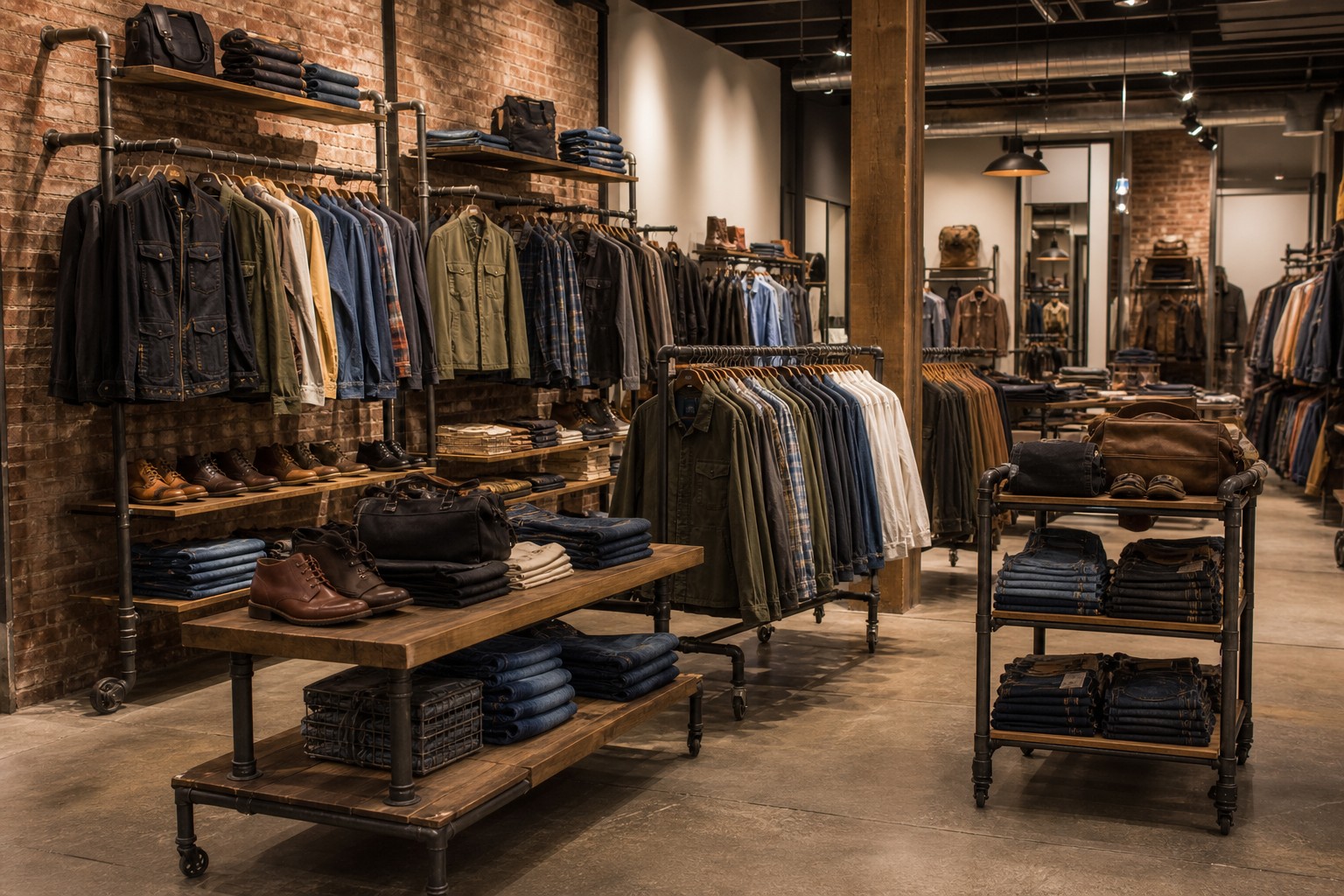
Retail Display USA presents the line as a broad collection that includes rolling floor racks, display tables, outrigger wall units, countertop displays, and pipe-and-slatwall options. A buyer should use that range to build a store plan by zone rather than selecting isolated products.
Where the Pipeline Collection Fits
The Pipeline collection is especially relevant for apparel, footwear, accessories, lifestyle products, and other merchandise that benefits from a strong fixture identity. It can support both hanging and folded presentations while keeping the wall and floor visually related.
The industrial look can be prominent or restrained. A full-store package makes the fixture language a central part of the brand. A smaller group of Pipeline pieces can create a feature area within a more neutral store.
Plan the Perimeter With Pipeline Outriggers
The Pipeline outriggers category supports wall-based merchandise presentation. Outriggers are useful when a retailer wants hanging bars, shelves, faceouts, or related accessories to project from an upright system rather than a continuous slatwall surface.
Before choosing the wall system, map:
- total usable wall width
- doors, columns, outlets, and baseboards
- garment lengths and hanger types
- folded-product and accessory needs
- feature positions and replenishment zones
- signage locations
- customer reach and staff access
Do not estimate the number of uprights or accessories from photographs. Confirm the system layout and current component requirements with RDUSA.
Add Floor Capacity With Pipeline Racks
The Pipeline racks category includes several rack directions for apparel presentation. Choose the rack role before the rack shape.
Use a floor rack when merchandise needs to be browsed from one or more sides, when the perimeter is already full, or when a seasonal assortment needs a movable location. Compare straight runs, multi-way presentations, round formats, and specialized racks according to garment length, product density, customer approach, and reset frequency.
Keep enough space around the rack for browsing and replenishment. The U.S. Access Board's accessible route guidance is a useful project-planning reference, alongside applicable local requirements.
Use Tables for Folded and Featured Products
The Pipeline nesting tables can support folded apparel, coordinated outfits, footwear, accessories, or launch stories. Tables work best when the merchandise benefits from touch and comparison.
Nesting formats can provide layers and allow parts of the group to be separated. Plan how the tables will be used on ordinary weeks, not only during a launch. A feature that looks excellent when fully styled may become inefficient if staff cannot replenish it quickly.
Decide Where Slatwall Belongs
The Pipes and Slatwall category can connect pipe-inspired framing with a slatwall merchandising surface. This is useful when the store needs a broader range of hooks, shelves, faceouts, or small-product accessories than an open outrigger bay provides.
Use slatwall where product variety and reconfiguration matter. Use open pipe or outrigger sections where the fixture should remain visually lighter or where hanging apparel is the main job. A mixed wall can balance capacity with a cleaner feature presentation.
Use Merchandisers as Focused Fixtures
The Pipeline merchandiser category can support a smaller product story, coordinated outfit, or focused department. Treat a merchandiser as a deliberate destination rather than leftover floor capacity.
Choose the merchandise first, then verify the fixture's current configuration, accessories, dimensions, and delivery requirements.
Build a Complete Apparel Fixture Schedule
Create one row for every fixture zone and include:
- zone name
- fixture family
- product type
- hanging, folded, shelved, or accessory presentation
- preferred finish
- quantity
- accessory list
- signage need
- receiving and assembly note
The schedule should show how the wall, racks, and tables share the inventory. If every fixture is planned at maximum density, the store will have no room for launches or product movement.
Buying Questions That Protect the Project
Ask RDUSA to confirm:
- current product availability and finish options
- which accessories belong to each fixture
- starter, add-on, or standalone requirements
- assembly status
- packaged dimensions and freight approach
- replacement or additional component availability
- recommended information for a complete quote
Avoid using a general claim from one Pipeline item as a specification for the entire collection. Product dimensions, capacities, finishes, and availability vary.
Common Pipeline Planning Mistakes
The most common mistake is buying the look without planning the merchandise. The fixture package should support real SKU types, garment lengths, product weights, and replenishment routines.
Other mistakes include mixing accessories without confirming compatibility, placing too many industrial elements in a small space, ignoring floor protection, and failing to coordinate receiving and assembly before opening.
Build a Launch and Everyday Layout
Apparel stores often plan fixtures around opening day or a major collection launch. The same layout also has to work after the feature merchandise sells down. Prepare two fixture maps: a launch layout and an everyday replenishment layout.
The launch map can use more front-facing product, coordinated outfits, and table stories. The everyday map should show how core inventory, size runs, and replenishment continue when the feature presentation changes. Confirm that the same racks, outriggers, tables, and accessories can support both conditions without leaving awkward empty zones.
This exercise helps the buyer distinguish necessary fixtures from launch-only styling. It also gives the visual merchandising team a practical reset plan instead of requiring a new fixture order whenever the campaign changes.
Plan the Collection in Buying Phases
For a larger store package, divide the decision into core infrastructure, opening-day merchandising, and later additions. The core phase covers the fixture roles the store cannot operate without. The opening phase adds the accessory quantities and feature pieces required for the initial assortment. Later additions can respond to actual sales patterns rather than assumptions made before opening.
Ask the quote to preserve those phase boundaries. This makes the budget easier to evaluate and helps the buyer see whether a removed item affects store operation or only presentation depth. It also creates a controlled path for adding matching pieces after staff have learned which walls, tables, and racks carry the most productive merchandise.
Frequently Asked Questions
Does the Pipeline collection have to be used throughout the whole store?
No. It can define the entire store or a specific department, feature wall, or apparel zone. The scale should match the brand and floor plan.
Can Pipeline fixtures support folded products as well as hanging apparel?
Yes, the collection includes table and wall directions that can support folded or shelved products when the selected components fit the merchandise.
Should I choose outriggers or pipe-and-slatwall walls?
Choose outriggers for a more open hanging and shelf presentation. Choose pipe-and-slatwall where a broader accessory mix and frequent reconfiguration are important. Some stores may use both.
What should I send with a Pipeline quote request?
Send a floor plan, wall dimensions, merchandise categories, fixture quantities, accessory needs, finish preference, delivery address, and project schedule.
Build One Coordinated Pipeline Plan
The Pipeline collection is strongest when the perimeter walls, floor racks, tables, and focused merchandisers share clear roles. Start with the merchandise and customer route, then choose the collection pieces that support them.
Explore the full Pipeline fixture line and use Samples and Quotes to submit the floor plan, merchandise schedule, wall dimensions, finish direction, and delivery details for a coordinated package.