
Realistic vs Abstract Mannequins for Retail
Realistic vs abstract mannequins is primarily a choice between character and neutrality. Choose realistic mannequins when a lifelike customer, age, attitude, or styling story supports the merchandise. Choose abstract mannequins when the clothing should remain the visual focus and the store needs a cleaner form that can move across seasons and collections.
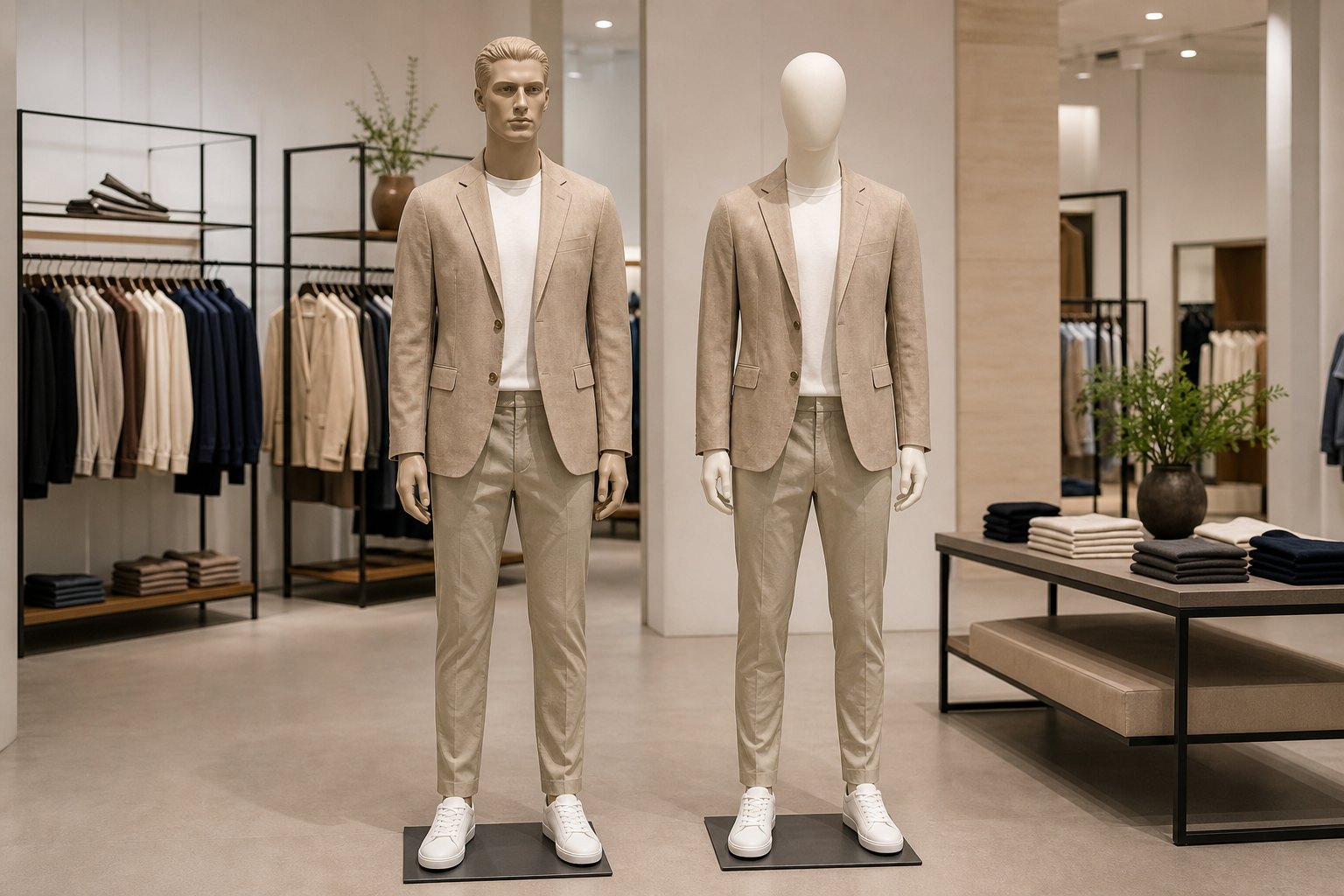
Retail Display USA organizes lifelike styles under realistic mannequin categories and smooth, simplified styles under Egg Head categories. Buyers may use the broader term "abstract mannequins," but it should not be mistaken for a separate RDUSA category name. Start with the complete retail mannequin range, then compare the relevant style paths.
Quick Comparison
| Decision factor | Realistic mannequins | Abstract or egg-head mannequins |
|---|---|---|
| Visual effect | Lifelike, character-led presentation | Clean, simplified presentation |
| Merchandise focus | Outfit shown as part of a complete person or lifestyle | Garment shape and color stay prominent |
| Brand fit | Story-driven, traditional, lifestyle, or demographic-specific retail | Contemporary, minimalist, fashion-led, or frequently changing concepts |
| Styling work | May involve more attention to face, hair, and complete character | Usually avoids hair and facial styling decisions |
| Long-term flexibility | Best when the character continues to fit the brand | Neutral appearance can move between more campaigns |
This table is a planning guide, not a statement that every model has the same construction or handling requirements. Confirm finish, pose, base, dimensions, availability, and dressing method for the exact mannequin being considered.
When Realistic Mannequins Are the Better Choice
Realistic mannequins support merchandise that benefits from human context. A complete outfit can look more approachable when the display suggests a recognizable shopper, activity, or occasion. This can help traditional apparel stores, formalwear retailers, lifestyle stores, uniform sellers, and departments built around complete looks.
The RDUSA site includes separate realistic male mannequin and realistic female mannequin paths. Those pages show that "realistic" describes a broad visual family rather than one pose or one body type. Buyers should compare actual products instead of assuming every realistic mannequin communicates the same age, build, expression, or posture.
Use Realistic Forms for a Deliberate Character
A lifelike face and hairstyle can strengthen a display when the character is intentional. For example, a specialty apparel store may want the mannequin to reflect the customer or activity represented by the collection. The face, body, pose, apparel, and props should tell one coherent story.
The same detail becomes a weakness if it conflicts with the brand. A highly specific face or hairstyle may date faster than a neutral form. Buyers should ask whether the character will still make sense after several seasonal resets.
Account for Styling and Recovery
Realistic forms can require more complete visual maintenance. Hair, wigs, facial marks, makeup details, and accessory placement may become part of the reset. That does not make them impractical, but the store should include this work in its merchandising routine.
When Abstract Mannequins Are the Better Choice
Abstract mannequins reduce facial detail so the eye moves toward silhouette, fabric, and outfit coordination. On the RDUSA site, buyers can review the male egg-head mannequin category and female egg-head mannequin category as relevant simplified styles.
This approach suits contemporary fashion, minimalist interiors, sportswear, rotating capsule collections, and brands that do not want a fixed facial identity. The form still gives the garment human shape, but it does not compete with the product through expression or hairstyle.
Use Neutrality to Extend Campaign Life
A smooth head and restrained finish can support a bright summer collection, a dark winter story, or a monochrome basics wall without changing the mannequin's identity. That flexibility is useful when the store changes visual themes often.
Abstract does not mean invisible. Pose, body shape, finish color, and spacing still affect the presentation. A dramatic abstract pose may attract more attention than a quiet realistic stance, so buyers should evaluate the complete form rather than the head alone.
Choose by Store Type
Boutiques and Fashion Stores
Abstract or egg-head styles often fit edited fashion environments because they keep attention on cut, layering, and color. A boutique with a strong lifestyle character may still prefer a realistic form for a featured window story.
Department and Family Apparel Stores
Realistic mannequins can help shoppers understand complete outfits in a familiar way. A mixed mannequin program may work better than forcing every department into one style.
Sportswear and Active Retail
Pose and product function usually matter more than facial realism. Compare the style decision with the intended movement and floor footprint. Athletic or abstract forms may suit technical apparel, while a realistic form can support a lifestyle-oriented activewear story.
Formalwear and Occasion Retail
Realistic mannequins can make a complete formal look feel more finished, but a clean abstract form can produce a more editorial presentation. Let the store's visual language decide.
Buyer Checklist Before Ordering
- Confirm whether the selected model is realistic, egg head, headless, or another style.
- Check pose, body dimensions, base style, finish, and floor footprint.
- Consider how staff will dress and reposition the form.
- Plan where sellable inventory will sit near the display.
- Test whether the mannequin's character supports the brand for more than one campaign.
- Confirm availability and current product details with RDUSA before committing to a coordinated group.
The mannequin should anchor a shoppable zone, not become an isolated decoration. Pair the displayed look with nearby retail clothing racks, wall fixtures, or folded inventory so customers can find the garments shown.
Common Buying Mistakes
One mistake is treating "realistic" as automatically traditional and "abstract" as automatically modern. The pose, finish, clothing, lighting, and surrounding fixtures can change that impression.
Another is selecting from a close-up product image without checking the full footprint. Wide stances, seated poses, or extended arms may need more clearance than expected. A strong display must work with shopper circulation and staff access.
A third mistake is buying a matched group before testing how the finish reads under the store's lighting. Confirm the exact product and review samples or current photography where possible.
Frequently Asked Questions
Are egg-head mannequins the same as abstract mannequins?
Egg head is the RDUSA category wording for relevant smooth, simplified head styles. Buyers often describe these as abstract mannequins, but the exact product name and finish should be confirmed on the category page.
Do realistic mannequins sell clothing better?
Not in every store. They can strengthen a lifelike styling story, while abstract forms can keep more attention on the garment. The better choice is the one that supports the product and brand without creating extra visual conflict.
Which style is easier to reuse?
An abstract form is often visually neutral across campaigns. Physical reuse still depends on the pose, finish condition, handling, and whether future clothing fits the form.
Can a store mix realistic and abstract mannequins?
Yes, if the difference is deliberate. Use separate display zones or a clear hierarchy so the mix looks planned rather than inconsistent.
What should a buyer confirm before ordering?
Confirm dimensions, pose, base, finish, dressing method, availability, shipping or assembly expectations, and the amount of clearance needed in the intended location.
Final Recommendation
For realistic vs abstract mannequins, choose realistic forms when customer character and lifestyle storytelling are central to the sale. Choose abstract or egg-head forms when garment shape, campaign flexibility, and a neutral fashion presentation matter more. Review the current RDUSA mannequin categories, then use Samples & Quotes to confirm the exact forms needed for the floor plan.
Retail Planning Resource
The National Retail Federation publishes retail industry research and store-operations material that can help teams connect visual merchandising decisions with broader store planning.
Editorial Workflow Support
Content operations and omnichannel workflow support are provided in part by Sookly.