
Slatwall Material Types and Cost Drivers
Slatwall material types range from economical paint-grade and melamine-faced panels to HPL, natural veneer, PVC, aluminum, steel, and decorative 3D textured systems. The least expensive panel is not automatically the lowest-cost finished wall: finish work, inserts, trim, freight, installation, accessories, and the intended environment can change the complete project cost.
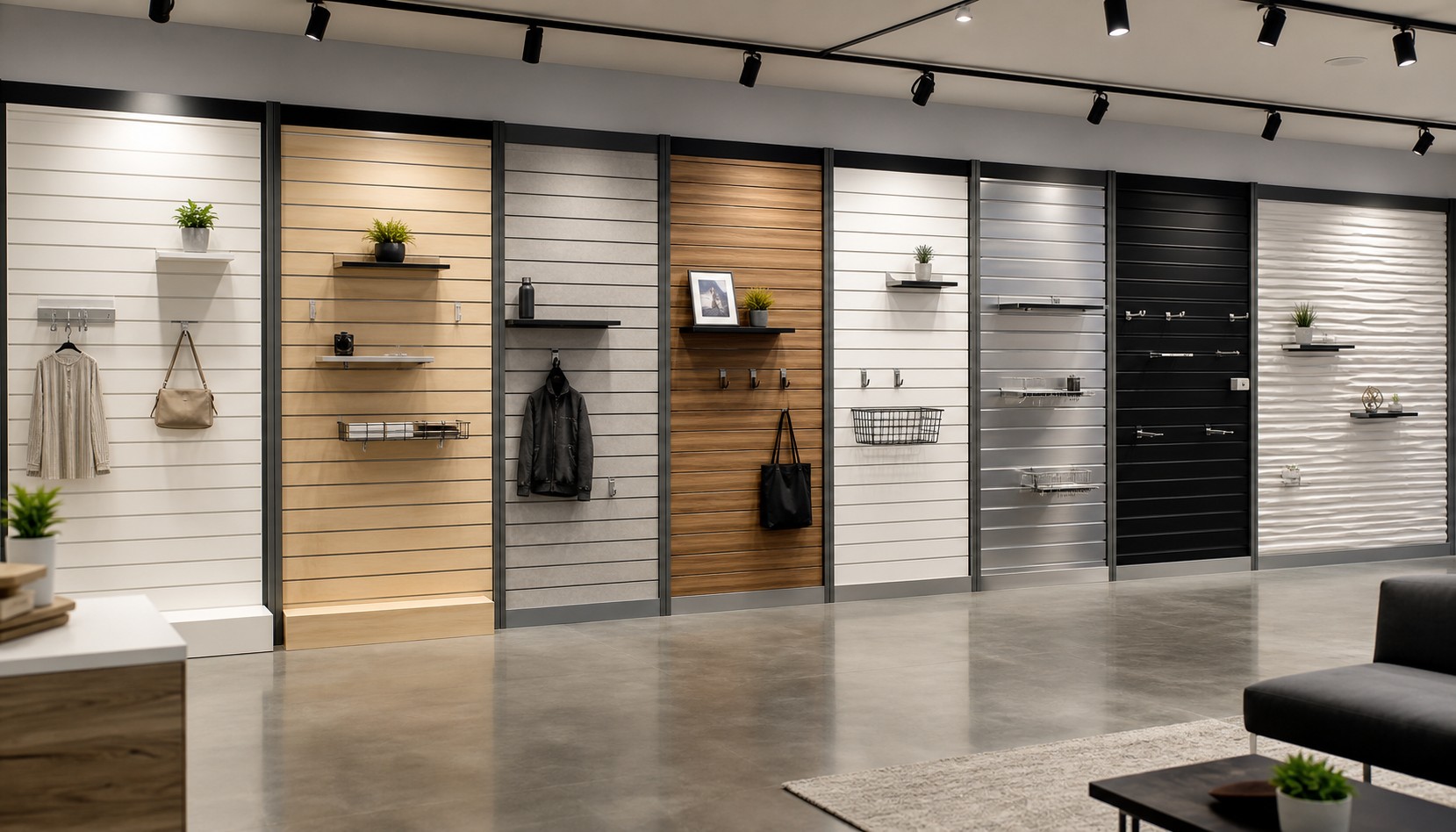
RDUSA groups its current slatwall range into essential, specialty, and textured directions. This guide helps buyers understand why one material may cost more than another and when that additional cost serves a real store requirement.
Slatwall Materials at a Glance
| Material or finish family | Typical buyer priority | Relative cost drivers |
|---|---|---|
| Paint-grade MDF | Custom field-painted color and a straightforward interior retail wall | Panel price may start lower, but preparation, paint, labor, and touch-up add cost |
| LPL or melamine-faced slatwall | Factory-applied colors, patterns, and wood-look options | Finish selection, inserts, quantities, freight, and trim |
| HPL slatwall | Richer custom laminate direction and a more finished commercial surface | Higher-pressure laminate, selected pattern, fabrication, and inserts |
| Natural veneer slatwall | Real wood character with stain, sanding, or paint flexibility | Veneer species, finishing labor, color matching, and material variation |
| 3D textured slatwall | Physical relief and a feature-wall effect that also merchandises | Formed texture, finish process, matching trim, layout, and freight |
| PVC slatwall | Light section handling and moisture-resistant product construction | Extruded section system, finish, project exposure, and shipping format |
| Aluminum slatwall | Metal construction, modern appearance, and product-specific commercial performance | Extrusion size, finish, custom length, and installation system |
| Steel slatwall | Heavy-duty metal construction, magnetic surface, and high-use retail settings | Steel profile system, finish family, trim, freight, and installation |
Paint-Grade MDF: Lower Entry Price, More Finish Work
Paint-grade slatwall can be a practical starting point when a store wants a custom color and has a suitable interior environment. The panel may cost less than decorative or metal systems, but the buyer should include surface preparation, primer or paint system, labor, drying time, installation handling, and future touch-up.
It is most useful when the store controls the finishing process and needs a color not readily available as a factory finish. If the project requires a ready-to-merchandise wall with minimal finishing work on site, another panel family may produce a more predictable complete cost.
LPL or Melamine: Factory Finish and Broad Visual Choice
Low-pressure laminate and melamine-faced panels give retailers a factory-applied surface across solid colors, wood looks, and decorative patterns. RDUSA currently lists a broad LPL slatwall range.
LPL often fits general retail walls where a finished appearance and practical budget matter more than a custom premium laminate. Compare the real product sample, current finish, panel construction, groove inserts, dimensions, and availability before choosing by screen image alone.
HPL: Premium Laminate Direction
High-pressure laminate slatwall is aimed at buyers who want a richer custom laminate finish or a surface selected for a more demanding visual specification. RDUSA describes its HPL slatwall as offering vibrant finishes and many wood-grain directions.
HPL normally costs more than a basic melamine or paint-grade panel because the finish system and selection are different. That premium makes sense when the wall is a prominent customer-facing surface and the selected laminate supports the store design.
Natural Veneer: Real Wood Character
Veneer slatwall uses real wood veneer to create natural grain and material variation. RDUSA currently lists maple, red oak, knotty pine, and birch directions and notes that veneer can be stained, sanded, or painted.
Veneer cost is influenced by species, finishing, color matching, sample approval, and the labor required to achieve the intended appearance. Buyers should expect natural variation rather than the exact repetition of a printed or laminate pattern.
3D Textured Slatwall: Physical Form, Not Only Surface Graphics
3D textured slatwall adds real surface relief in brick, barnwood, cement, metal, block, tile, tire-tread, and other visual directions. The cost reflects more than a printed design: physical texture, forming, finishing, trim, pattern layout, and shipping all affect the finished wall.
This category makes sense when the wall needs to create atmosphere and merchandise at the same time. A flat printed panel may imitate color or pattern, but it does not create the same physical shadow, edge, or depth.
PVC: Environment and Handling Can Justify the Price
RDUSA describes its PVC slatwall as lightweight and water- and moisture-resistant. Those traits can justify PVC where variable humidity, handling, or a section-based format matters.
Do not convert moisture resistance into a universal outdoor claim. Exposure, temperature, UV, wall support, and installation remain product- and project-specific.
Aluminum and Steel: Pay for a Metal System When It Is Needed
Aluminum slatwall and steel slatwall are specialty systems rather than decorative metal-look laminates. Their price reflects metal construction, profile format, finish, freight, and installation requirements.
Aluminum can suit buyers seeking a clean metal system and multiple groove-spacing options. Steel can suit high-use environments where its interlocking profiles, magnetic surface, and available finish families serve the store. Exact performance and accessory guidance must come from the selected product.
What Actually Makes Slatwall More Expensive?
Material is only one factor. Total project cost may include:
- panel dimensions and quantity
- finish or veneer selection
- groove spacing and inserts
- custom colors or lengths
- matching trim and corners
- samples and finish approval
- cutting and installation labor
- wall preparation and backing
- freight, delivery access, and damage protection
- accessories, shelves, hooks, and hangrails
A low panel price can become less attractive if the wall requires extensive field finishing. A premium panel can be justified when it removes finishing steps or creates the store's main visual feature.
Compare Complete Installed Value, Not One SKU
Broad retail-fixture catalogs often lead with low-price or fast-shipping messages. Those details matter, but a buyer still needs to compare equivalent systems. A paint-grade panel, a finished LPL panel, a physical 3D panel, and a steel profile wall do not solve the same problem.
Request a quote that identifies the panel, finish, inserts, trim, quantities, accessories, freight assumptions, and any required project confirmation. That creates a useful comparison instead of comparing unrelated headline prices.
Frequently Asked Questions
What is the least expensive type of slatwall?
Paint-grade or basic finished MDF panels may have a lower initial panel price, but finishing, inserts, freight, and installation can change the complete cost. Request current like-for-like quotes.
Why is HPL slatwall more expensive than LPL?
HPL uses a different laminate system and is generally selected for premium custom finish requirements. The exact difference depends on the current products and selected finish.
Why does 3D textured slatwall cost more than a printed panel?
True 3D panels include physical surface relief, finishing, pattern considerations, and matching trim rather than only a graphic surface.
Is metal slatwall always better?
No. Aluminum or steel should be chosen when their construction, finish, or product-specific performance serves the project. Standard panels are often more economical for typical interior retail walls.
How can a retailer compare slatwall prices accurately?
Compare the complete panel system, finish, dimensions, inserts, trim, freight, installation, and accessories. Use current written quotes rather than old category prices.
Final Recommendation
Choose slatwall material types from the environment, merchandise, visual role, installation plan, and complete installed cost. Start with the RDUSA slatwall categories, shortlist the relevant material families, then request current samples and a like-for-like quote through Samples & Quotes.
Retail Planning Resource
The National Retail Federation publishes retail operations and store-planning research that can help buyers evaluate fixture investments in a broader merchandising context.