
T-Shirt Display Fixtures for Retail Stores: Stands, Racks, and Layout Ideas
T-shirt display fixtures help apparel retailers show folded stacks, hanging styles, featured graphics, and size runs without making the store feel cluttered. T-shirt displays cover several different fixture types — spinning racks, wall-mounted hangrail systems, countertop units, folded-goods tables, and tower-style floor stands. The right choice depends on whether the store is selling by volume or by style, whether shoppers browse or grab, whether the shirt is a featured graphic product or part of a broader apparel mix, and whether the fixture will change weekly or stay in place for months.
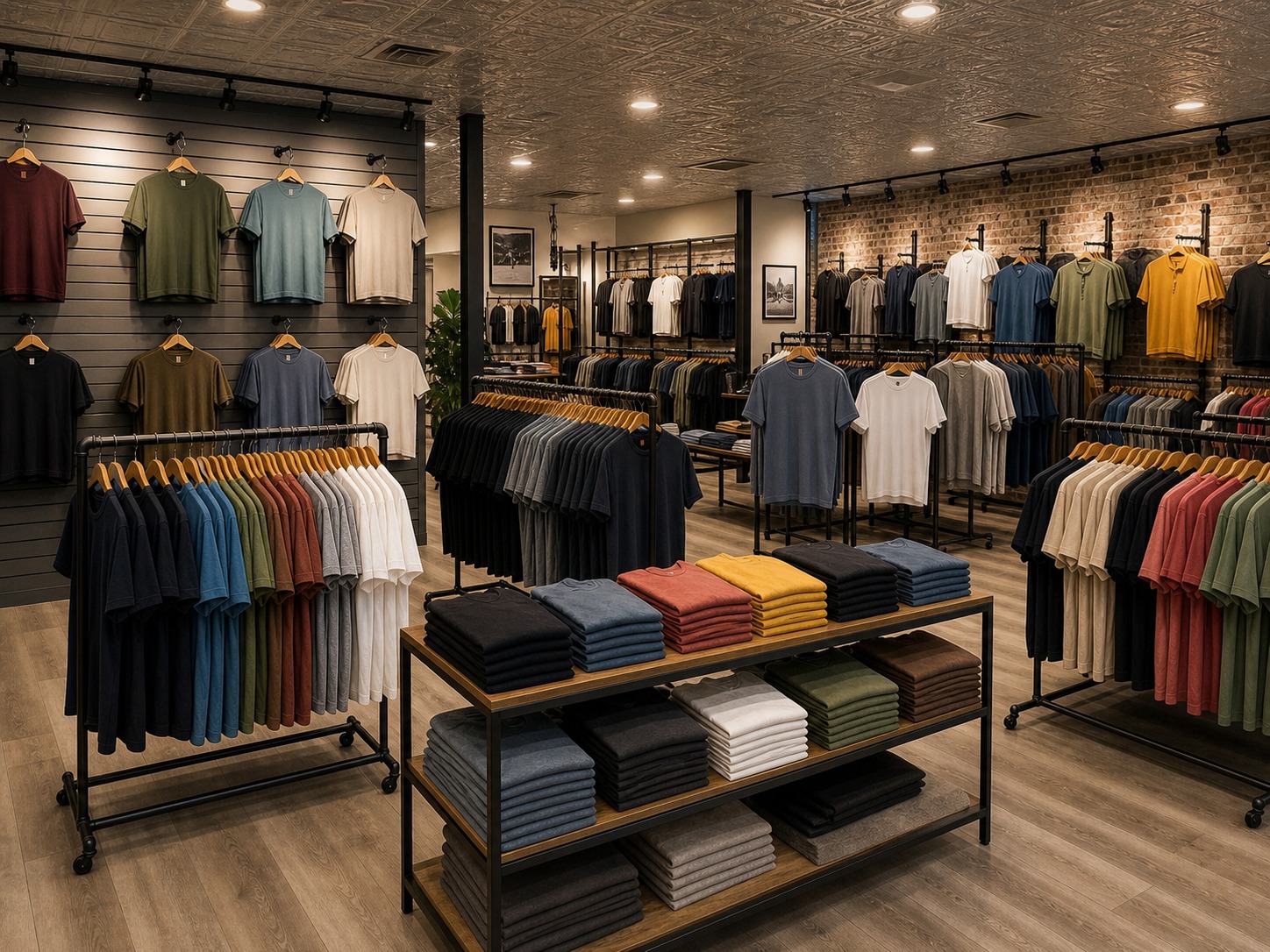
Retail Display USA carries t-shirt display fixtures alongside related categories including slatwall, rolling racks, and mannequins. This guide covers how to choose the right fixture type by store format, how to plan a complete apparel setup, and what to confirm before ordering.
Why T-Shirt Display Fixtures Matter for Retail Buyers
A strong fixture decision starts with the merchandise. For apparel stores, boutiques, screen-print shops, campus stores, souvenir retailers, pop-up vendors, and event merchandise sellers, the display must hold product clearly, fit the store layout, and make restocking practical for staff during normal trading hours.
The main commercial reason to choose the right t-shirt display is that the fixture type affects both selling and operational performance. A spinning rack that sells fifty units a day needs to be easy to refill quickly. A hanging display near the entrance needs to show the graphic well enough to stop customers without taking up too much floor space. A folded table display needs the right product depth so stacks stay stable through a busy trading period.
Retailers planning t-shirt display fixtures should compare the dedicated t-shirt displays line with supporting categories such as slatwall, rolling racks, and mannequins. The best setup depends on whether the store needs folded presentation, hanging support, or a complete apparel story.
Main Types of T-Shirt Display Fixtures
T-shirt retailers typically choose between folded displays, hanging displays, spinning racks, wall-mounted options, countertop units, and tower-style floor stands.
Folded displays work well when graphics and color runs matter — customers can see the graphic clearly on a folded shirt. Hanging displays are better when shoppers need to see the front of the shirt quickly and browse sizes without unfolding.
A complete apparel setup may use more than one method. A slatwall hangrail can hold featured tees, a stand can manage volume, and a table can carry folded best sellers or seasonal graphics.
How T-Shirt Displays Work With Other Fixtures
T-shirt display fixtures work best within a complete apparel system. Wall displays carry product at eye level — slatwall panels with hangrails or faceouts can show hanging tees and featured graphic prints. Floor stands and racks handle volume and size runs. Nearby mannequins can show a complete outfit context — the graphic tee with shorts, a jacket, or accessories that connect the display.
For a souvenir or campus store, a spinning rack near the entrance handles high-frequency browsing while a wall display behind it carries a curated selection of featured styles. For a boutique, a wall-hung slatwall display may be the primary presentation, with a small floor stand nearby for a best-selling graphic. For a pop-up vendor, a freestanding rack system is practical for portability while still displaying enough product for efficient selling.
Planning Before You Order
Before ordering, confirm the selling environment, the number of different SKUs that need to be on the floor at one time, and how often the display will need to be reset. Retailers sometimes underestimate how many shirts need to be visible for the fixture to sell effectively — a display that looks full with twelve shirts may need to carry thirty for a high-volume souvenir location.
Also confirm whether the store needs a permanent fixture or a portable one. Campus stores, event vendors, and pop-up retailers often need fixtures that can be moved or packed between selling events. Permanent retail stores can invest in wall-mounted or fixed floor fixtures that carry more product and last longer.
Best Store Uses for T-Shirt Display Fixtures
Souvenir and Campus Stores
High-volume graphic tee locations typically benefit from spinning racks with strong capacity and easy refill access. The fixture should hold enough product for multiple hours of selling without requiring constant staff attention. A combination of a floor spinner and a slatwall wall display can carry both volume and featured styles at the same time.
Boutiques and Apparel Stores
Boutiques typically want fewer shirts displayed more selectively. A slatwall hangrail with five to eight featured tees, paired with a small stand for size runs, keeps the display looking curated. The mannequin context helps — if a graphic tee is the boutique's featured piece, dressing a mannequin in the full outfit and placing it adjacent to the tee display can drive attach sales.
Screen-Print Shops and Custom Apparel
Retailers selling custom or screen-printed tees may benefit from a combination of hanging display (to show the graphic prominently) and a sample or folded display that gives customers easy access to check size and fabric feel. The fixture should not obscure the artwork.
Pop-Up Vendors and Event Sellers
Portability is the primary requirement. Freestanding spinning racks and collapsible floor stands allow the display to be set up and broken down quickly. Wall space may not be available, so floor-standing capacity matters more than wall integration.
Common Buying Mistakes to Avoid
One common mistake is buying more display capacity than the store can stock and maintain. An oversized t-shirt display that is never full looks worse than a smaller display at the right density.
Another mistake is using the wrong fixture type for the selling behavior. A display meant for grab-and-go souvenir sales needs a different configuration than one designed for boutique-style browsing.
A third mistake is not planning restocking access. A display that is easy to fill quickly reduces the staff time required to keep the presentation clean during busy periods.
Build the Right Display With RDUSA
Retailers planning t-shirt display fixtures can start with Retail Display USA's t-shirt display category and compare related fixture options based on store format, product volume, and selling environment.
For a complete apparel plan, review the supporting RDUSA categories: slatwall, rolling racks, and mannequins. The best result comes from treating the wall, floor fixtures, accessories, and merchandising goals as one coordinated system.
FAQ
What is the best way to display t-shirts?
The best approach depends on the selling environment. For graphic tees where the design matters, hanging or folded display with the shirt face-out works best. For high-volume locations where size range matters more than individual graphics, a spinning rack gives maximum capacity in minimal floor space. For boutiques, a slatwall hangrail with a curated selection keeps the display looking intentional. Most stores benefit from using two methods: one for capacity and one for feature presentation.
Should shirts be folded or hung?
Use hanging display when the graphic is important and customers need to see it clearly without unfolding. Use folded display when color runs, size comparison, or table browsing is the primary shopping behavior. Many stores use hanging display for featured styles and folded display for best sellers or full size runs nearby.
Can t-shirts be displayed on slatwall?
Yes. Slatwall with hangrails, faceouts, or waterfall bars is a common way to display hanging tees in boutiques and apparel stores. Slatwall gives the wall a more finished look than a freestanding rack and keeps t-shirts at eye level alongside the rest of the apparel wall. Slatwall panels with appropriate accessories can hold tees and create a wall display that looks more considered than a standalone spinner.
How many shirts fit on a display stand?
Capacity depends on the specific fixture type and shirt thickness. Confirm per-arm or per-level capacity from the RDUSA product listing before ordering. As a general planning note: thicker fabrics and hoodies take more space per hanger than lightweight graphic tees, so seasonal fabric weight affects real display capacity.
How should retailers choose t-shirt display fixtures?
Start with the selling environment and the primary shopping behavior. Volume-driven locations with high foot traffic and fast turnover benefit from high-capacity spinning racks and simple floor stands. Style-driven locations benefit from hanging displays, slatwall integration, and mannequin context. Confirm the fixture capacity, dimensions, and portability requirements before ordering.
Retail Planning Resource
For broader retail planning context, the National Retail Federation publishes retail industry research and store operations insights that can help store owners connect fixture decisions with shopper behavior.