
Tire Tread Slatwall: What It Is and Where It Fits
Tire tread slatwall is a decorative textured slatwall option designed to give a retail wall an industrial or automotive visual character while supporting a compatible merchandise-display system. It should not be confused with vehicle tire tread, road-surface material, or generic rubber tread plate.
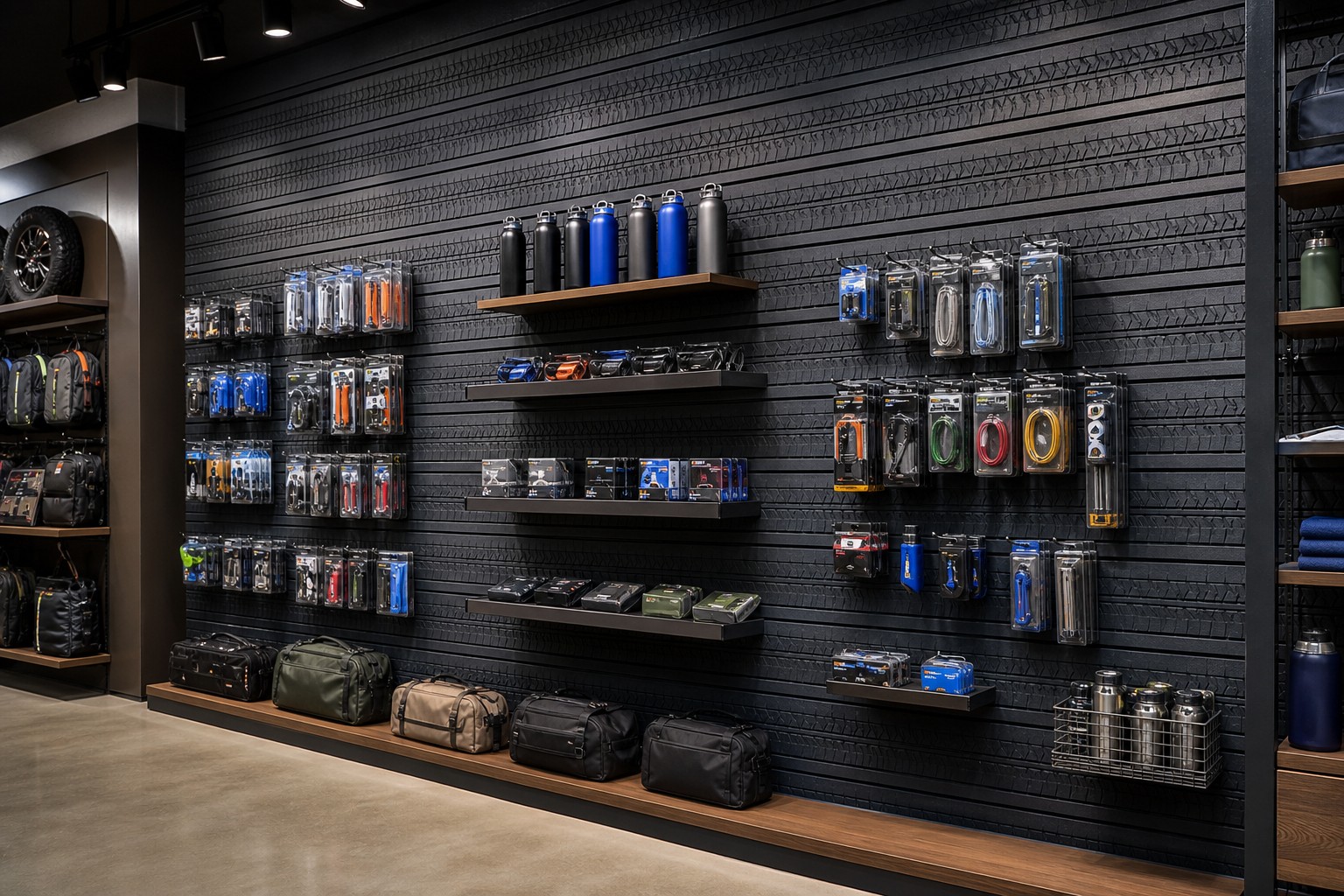
The finish can help establish a strong theme in automotive, motorsport, sporting goods, workwear, footwear, hobby, or industrial-style retail. The buyer still needs to confirm the exact product construction, panel dimensions, finish, installation requirements, accessory compatibility, and current availability before specifying it for a project.
Review the current tire tread slatwall category rather than relying on general assumptions about textured panels. Confirm the current product detail and ordering information from that live category route.
Tire Tread Slatwall Is a Retail Display Finish
The term describes the appearance and merchandising role of the wall system. It does not mean the panel is a tire, a flooring tread, or a structural traction product. Searchers asking "what is a rubber tread plate?" may be looking for several different materials, so RDUSA content should state the distinction clearly.
For retail planning, think of tire tread slatwall as two decisions:
- Does the visual finish fit the store and brand?
- Does the exact panel system support the intended merchandise and accessories?
Both questions must be answered. A visually appropriate finish is not useful if the panel, installation, accessories, or product layout do not fit the project.
Which Stores Suit Tire Tread Slatwall?
| Store type | Potential visual role | Merchandising caution |
|---|---|---|
| Automotive and motorsport | Supports a mechanical, performance, or garage-inspired theme | Do not imply automotive performance properties |
| Sporting goods | Adds texture behind footwear, accessories, or equipment | Keep product visibility stronger than the pattern |
| Workwear and utility retail | Creates an industrial backdrop for rugged product stories | Confirm compatible fixtures for the merchandise |
| Footwear | Can reinforce traction, outdoor, or performance styling | Use shelves and spacing that keep products easy to compare |
| Hobby and specialty retail | Supports themed zones for tools, models, or accessories | Avoid overusing a strong pattern across every wall |
Use It as a Feature Wall or Department Zone
A strong textured finish often works best as a defined zone rather than an uncontrolled full-store treatment. A feature wall can identify a department, frame a product launch, or create a visual destination without competing with every other category.
Before selecting the area, view finish samples under the store's actual lighting when available. Dark, reflective, or deeply textured surfaces can read differently under warm, cool, directional, or diffuse light.
Use the finish to support the merchandise story. If the pattern becomes the first and only thing shoppers notice, simplify the product layout or reduce the area covered.
Plan Accessories and Merchandise Together
Slatwall accessories should be selected for the exact panel system and product. Review slatwall accessories, but do not assume every hook, shelf, faceout, or hangrail fits every panel or merchandising need.
Measure representative products and plan:
- package width and depth
- product weight using confirmed guidance
- shelf or hook projection
- customer reach
- spacing between merchandise
- label and sign locations
- staff replenishment access
The loaded wall is deeper and visually busier than an empty panel sample.
Balance Texture With Product Visibility
Tire-tread styling is visually active. Use consistent accessory finishes, controlled spacing, and clear product groups so the wall remains easy to shop.
Light or brightly colored packaging may contrast strongly against a dark pattern. Dark merchandise may need more spacing or lighting to remain distinct. Evaluate the complete composition rather than choosing the panel in isolation.
Compare Tire Tread With Other Textured Slatwall
The wider textured slatwall range may include finishes with different visual directions. Tire tread supports an industrial or performance-oriented mood. Brick, barnwood, concrete, or other finishes may suit different store stories.
Choose by brand fit and merchandise, not by novelty alone. Ask:
- What customer expectation should this wall create?
- Which products will sit against it?
- Will the finish remain appropriate when the assortment changes?
- Does it coordinate with flooring, lighting, counters, and adjacent walls?
- Can staff maintain a clean, readable display on the texture?
Installation and Project Verification
Installation requirements depend on the exact product and site conditions. Confirm wall preparation, panel orientation, edge treatment, seams, hardware, and any professional installation requirements before work begins.
Do not publish generic installation shortcuts or performance claims. Use the manufacturer's current instructions and qualified project review where required.
Common Buying Mistakes
The first mistake is confusing tire tread slatwall with rubber tread plate, flooring, or automotive material.
The second is choosing the pattern without viewing it alongside merchandise and lighting.
The third is assuming all slatwall accessories are interchangeable.
The fourth is ignoring the loaded wall projection into the shopping area.
The fifth is covering too much space with a strong finish and weakening product visibility.
Buyer Checklist
- Confirm that the product is the intended decorative slatwall finish.
- Review a current sample or product imagery where available.
- Measure the wall and loaded display area.
- Identify the merchandise and compatible accessories.
- Confirm construction, dimensions, finish, installation, and care guidance.
- Check lighting and contrast with representative products.
- Decide whether the finish belongs on a feature wall or larger department.
- Request current availability and project-specific guidance.
Frequently Asked Questions
What is tire tread slatwall?
It is a decorative textured slatwall option for retail display walls. It combines a tire-tread-inspired visual pattern with a compatible slatwall merchandising system.
Is tire tread slatwall the same as rubber tread plate?
No. RDUSA's tire tread slatwall should be evaluated as a retail display panel and decorative finish, not assumed to be automotive tread, flooring, or generic rubber plate.
Which stores can use tire tread slatwall?
It may suit automotive, motorsport, sporting goods, workwear, footwear, hobby, and industrial-style retail when the finish fits the brand and product plan.
Can standard slatwall accessories be used?
Do not assume compatibility. Confirm the exact panel and accessory combination before ordering.
Should tire tread slatwall cover the whole store?
It can be used in different scales, but a feature wall or department zone often keeps a strong pattern focused and easier to merchandise.
Final Recommendation
Tire tread slatwall is best used as a deliberate retail finish, not as a generic claim about rubber or automotive performance. Confirm the visual fit, exact panel system, merchandise, accessories, lighting, and installation together. Review the current RDUSA tire tread slatwall options and send wall dimensions, store type, merchandise examples, and preferred layout through Samples & Quotes.
Retail Planning Resource
The National Retail Federation publishes research and operational guidance relevant to broader store and merchandising decisions.