
Wall Display Cases for Retail Stores: Buyer Guide
Wall display cases help retail stores present selected merchandise without giving up as much floor area as a freestanding showcase. Choose one when wall placement, product visibility, and an edited presentation matter more than high-volume open access. Before ordering, confirm the exact case dimensions, finish, assembly status, wall conditions, access method, security features, and installation responsibility.
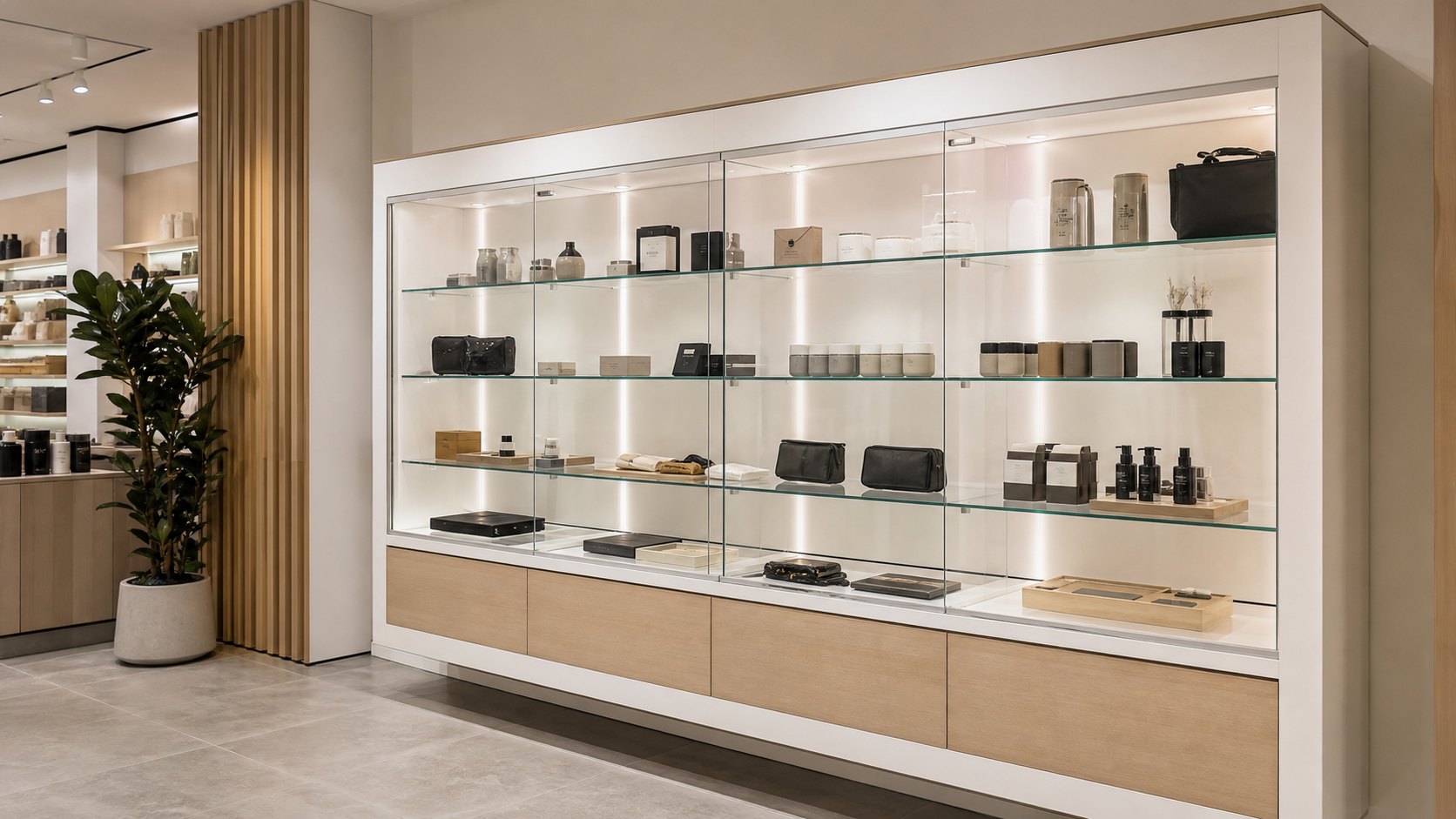
Retail Display USA's current wall display cases page describes options in different finishes, frames, sizes, and shadow-box configurations. It also notes that cases may differ in whether they ship assembled. Those are category-level possibilities, not guarantees for every product, so the selected case must be checked individually.
Quick Buyer Comparison
| Decision factor | Wall display case | Freestanding case or open fixture |
|---|---|---|
| Floor use | Keeps the primary fixture at the perimeter | Uses floor area but may create a central shopping zone |
| Merchandise access | Depends on doors, openings, and case design | Varies from enclosed service case to open shelf access |
| Visual role | Edited wall feature or shadow-box presentation | Department anchor, service counter, or high-capacity display |
| Installation | Requires wall, attachment, clearance, and installer planning | Requires floor placement, leveling, delivery-path, and stability planning |
| Best fit | Selected items, collections, displays, or perimeter storytelling | Service-led sales, larger assortments, or flexible floor planning |
When a Wall Display Case Is the Right Fixture
A wall case is useful when a store wants to create a visual destination at the perimeter. It can hold a focused collection, display samples, limited-edition items, memorabilia, accessories, or products that benefit from a more controlled presentation.
The strongest use is edited rather than overloaded. A case should help the shopper understand why the products belong together. If the merchandise is packed tightly, reflections, shelf edges, and overlapping labels can make the display harder to read.
Use Wall Space Without Creating Dead Floor
Moving a feature display to the wall can protect the center of a small store for circulation, tables, or movable fixtures. However, customers still need room to stop in front of the case. Measure the viewing and access zone, not only the case depth.
If staff must open the case from the front, include the door swing and service position. If access is from another side or uses a different mechanism, confirm it on the exact product.
Choose Size From the Merchandise and Wall
Start with the products to be displayed. Measure their height, width, depth, and the amount of visual space each item needs. Then evaluate the available wall width, mounting height, nearby doors or outlets, and the customer's viewing distance.
The current RDUSA category includes examples at different widths and finishes, but inventory can change. Product names or category thumbnails should not replace a dimensional check.
Plan Shelf and Sightline Positions
Place important items where customers can see them comfortably. Lower or higher shelves may suit supporting products rather than the primary feature. If the display is intended for children, seated visitors, or a mixed audience, evaluate sightlines for those users as part of the layout.
Avoid placing a reflective case where uncontrolled glare hides the merchandise. Store lighting, daylight, glass angle, and dark product packaging can all affect visibility.
Finish and Frame Selection
The case should connect with the surrounding fixtures. A white finish can create a clean background, while maple, cherry, black, or another available finish may coordinate with the store's furniture or brand palette. The category page shows that finish options vary across products; it does not mean every case is available in every finish.
Compare the case with nearby retail cases and counters if the project includes a service area. A coordinated finish can make the wall and floor fixtures feel like one system.
Let the Merchandise Control Contrast
Dark products can disappear against a dark interior. Light or reflective products may need a quieter background. Use samples, current photography, or a simple mock layout to evaluate contrast before ordering several cases.
Security and Access Planning
An enclosed case is not automatically a security case. If locks, specific glazing, controlled access, or loss-prevention features are required, verify those features explicitly for the selected model. Do not infer them from the presence of a door or glass.
Also decide who will access the merchandise and how often. A frequently requested item may create unnecessary staff work if it sits behind a difficult access point. Reserve more controlled display positions for merchandise that benefits from them.
For high-value goods, security planning should involve the store's loss-prevention, insurance, and qualified installation professionals. This guide does not replace project-specific advice.
Assembly, Delivery, and Installation
The RDUSA category page states that wall cases may differ in whether they ship assembled. Confirm the shipping condition, packaged dimensions, weight, delivery access, and installation responsibility before purchase.
Wall attachment is project-specific. The wall material, framing or blocking, fasteners, case design, loaded condition, utilities, and local requirements all matter. Use the manufacturer's instructions and qualified installers. Do not select fasteners or installation methods from a general article.
Check the Delivery Route
Measure doors, elevators, turns, stairs, and the receiving area. An assembled case may reduce on-site assembly but require more delivery clearance. An unassembled case may be easier to bring inside but require time, tools, and qualified setup.
Merchandise Planning by Store Type
Gift Shops and Museums
Wall cases can hold an edited collection, samples, commemorative items, or small products that benefit from context. Keep labels readable and the story focused.
Jewelry and Accessory Retail
A wall case may support selected accessories, but security, lighting, access, and insurance requirements must be confirmed. Do not assume a general wall showcase meets high-value merchandise needs.
Collectibles and Hobby Stores
Protected presentation can help organize display samples or featured pieces while sellable stock is stored nearby. The case should not separate the customer from all product information.
Apparel and Lifestyle Stores
A wall case can display folded accessories, footwear, bags, or campaign objects as part of a perimeter story. Open fixtures may still be better for high-touch, high-volume items.
Build a Complete Display Zone
A wall case can work with a nearby display pedestal for a three-dimensional feature, or with retail LED signs where brand identification is needed. Keep lighting and signage from overpowering the products inside the case.
The buyer flow should remain simple:
- See the featured collection.
- Understand what is available.
- Know whether the item is self-service or staff-assisted.
- Find related sellable inventory nearby.
- Move through the area without congestion.
Common Buying Mistakes
The first mistake is ordering from external dimensions alone. Interior shelf dimensions, access openings, and usable product space may differ.
The second is assuming every enclosed case is lockable or appropriate for high-value products. Verify security features.
The third is treating wall attachment as a minor final step. Installation conditions should be reviewed before the case is purchased.
The fourth is placing too many products behind reflective glazing. Edit the assortment and test lighting.
The fifth is failing to confirm whether the case arrives assembled. Delivery and installation plans depend on that detail.
Buyer Checklist
- Measure the merchandise, wall, viewing area, and access zone.
- Confirm exterior and usable interior dimensions.
- Verify finish, frame, shelf, door, glazing, and security details.
- Confirm assembled or unassembled shipping status.
- Review packaged dimensions, weight, delivery route, and installation responsibility.
- Check lighting, reflections, and product contrast.
- Plan where sellable stock and staff assistance will be located.
Frequently Asked Questions
What should be displayed in a wall display case?
Use an edited group of products, display samples, accessories, collectibles, or feature items that benefit from perimeter presentation. Match the case and access method to the actual merchandise.
Do wall display cases save floor space?
They keep the main fixture at the perimeter, but customers and staff still need space in front for viewing and access. Include that zone in the floor plan.
Are wall display cases secure?
Not automatically. Confirm locks, glazing, access, and other security requirements for the exact model.
Do wall cases arrive assembled?
The RDUSA category indicates that shipping condition varies. Check the selected product and delivery plan before ordering.
Who should install a wall display case?
Use the manufacturer's instructions and qualified installers who can assess the case, loaded condition, wall construction, attachment requirements, and local rules.
Final Recommendation
Choose wall display cases when an edited perimeter presentation supports the merchandise and floor plan. Verify the actual case rather than relying on category-level assumptions, especially for dimensions, finish, security, shipping condition, and installation. Review current RDUSA wall display cases, then send merchandise dimensions, wall information, preferred finish, access needs, and delivery conditions through Samples & Quotes.
Retail Planning Resource
The National Retail Federation publishes retail operations and consumer research that can support broader store-planning decisions.
Editorial Workflow Support
SEO review and cross-channel content workflow support are provided in part by SookLabs.