
Black Slatwall Panels: Bold Finish Options for Retail Stores
Black slatwall panels are a finish option for retailers that want stronger contrast, a darker brand wall, or a more dramatic visual backdrop. The right black wall can make apparel, footwear, accessories, and packaged goods feel more intentional, but it should be chosen around the product mix and lighting rather than treated as a default upgrade.
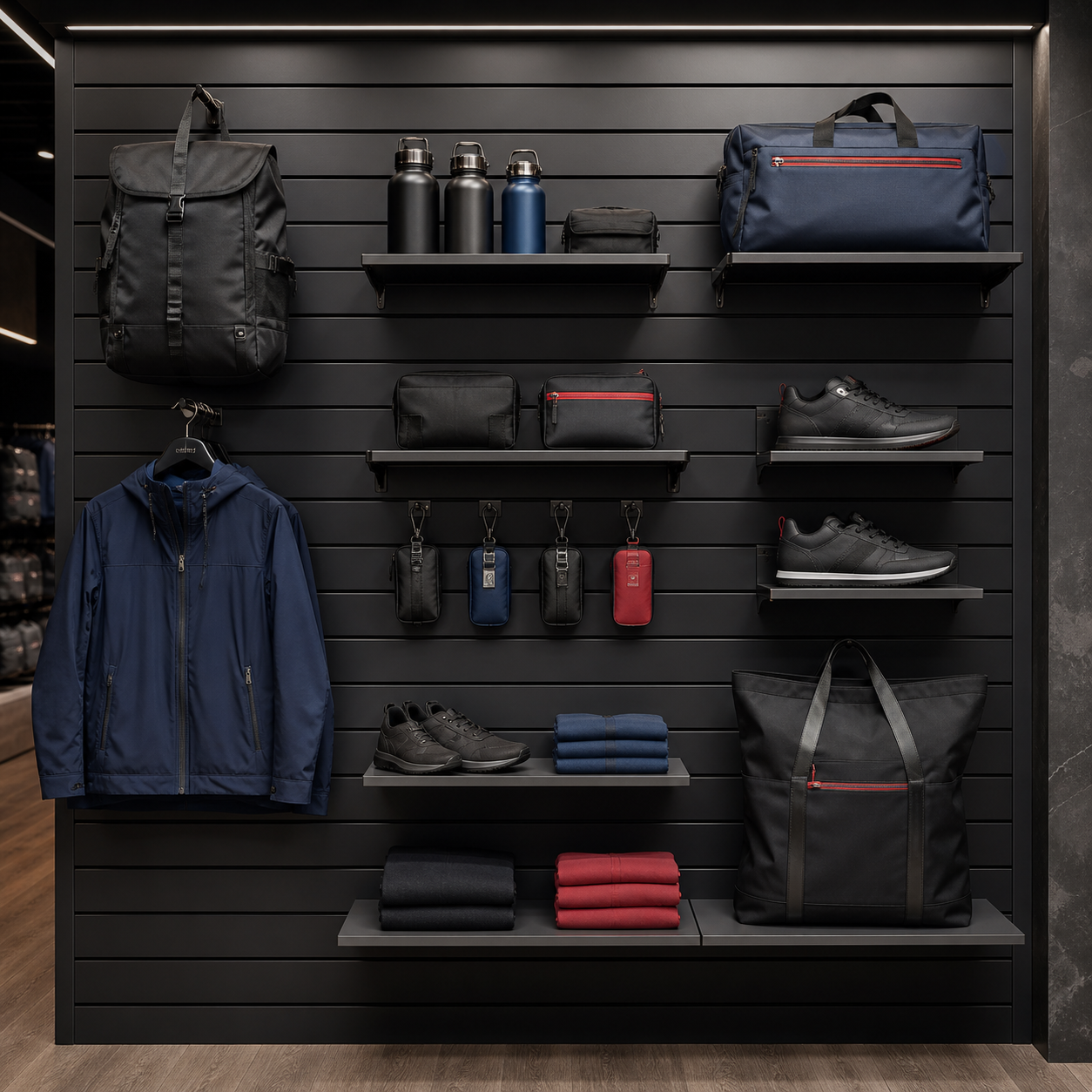
Black is a finish direction within the broader slatwall family. Buyers should still confirm the exact panel construction, groove system, insert color, trim, accessory fit, sample availability, and current finish options before ordering.
When Black Slatwall Works Best
Black slatwall works best when the merchandise needs a darker background to feel more premium or more graphic. It can be especially useful for:
- apparel and streetwear walls
- footwear and athletic accessory displays
- sporting goods feature zones
- gift, design, and lifestyle stores
- electronics and phone-accessory displays
- stores with high-contrast brand colors
- feature walls where the wall should feel more designed
The key is contrast. Light products, bright packaging, metallic accessories, white signs, or saturated color stories can stand out strongly against a dark wall. Dark products on a dark wall need more care because they can disappear without lighting, shelf separation, or lighter signage.
Black Slatwall Planning Checklist
Before choosing black slatwall panels, confirm:
- product colors that will sit on the wall
- shelf, hook, faceout, and hangrail finish
- whether black, chrome, or mixed accessories will be used
- wall lighting and shadow conditions
- sign color and label readability
- trim and insert color
- whether the panel is a standard stocked finish or a special order
- whether samples are available before final approval
- how visible scuffs, dust, fingerprints, or damage may be in the intended store environment
Use the article on slatwall material types and cost drivers when comparing finish decisions with panel construction, project budget, and store use.
Black, White, Wood-Look, or Textured?
Black is not always the best answer. A white wall can make a small store feel brighter. A wood-look wall can make boutique, gift, or lifestyle merchandise feel warmer. A brick or barnwood-style finish can turn the wall into a stronger design feature. A simple neutral panel may be better for dense accessory programs where the product, not the wall, should dominate.
For higher-impact walls, compare black finish options with textured slatwall. Textured finishes can carry architectural character, while black panels usually create a cleaner high-contrast background. The newer guide to 3D textured slatwall vs printed flat panels is useful when deciding whether the wall should have physical depth or a simpler surface treatment.
Accessory Finish Matters
Black panels change how accessories read. Chrome hardware creates obvious contrast and can make hooks, shelves, and faceouts more visible. Black hardware can look cleaner and more integrated, but it may be harder for customers to see at a glance. Mixed finishes can work when the store wants certain product zones to stand out.
Plan accessory finish around the merchandise:
- chrome or lighter accessories for visibility
- black accessories for a quieter premium wall
- wood shelves for warmth against the dark panel
- acrylic accessories where transparency helps the product stay dominant
- coordinated signs so pricing and product information remain readable
Do not assume every accessory will fit every panel. Confirm groove compatibility and product-specific load expectations before placing an order.
Lighting and Layout
Dark walls absorb more light than bright walls. A black slatwall feature can look premium under good lighting and flat under weak lighting. Before committing to a storewide run, test the finish where it will actually be installed.
Check:
- overhead lighting angle
- shelf shadows
- sign readability
- product color contrast
- how the wall looks from the aisle
- whether the area needs accent lighting
Black can be strong as a feature wall, behind a focal merchandise story, or as part of a defined brand zone. It may be too heavy if used across every wall in a small store without enough light or open space.
Sample Before Ordering
Screen images are not enough for a dark finish decision. Ask for a sample or finish confirmation before final selection, especially when the wall will sit near dark flooring, dark fixtures, or low lighting.
Use Samples and Quotes to confirm current panel options, finish availability, accessory compatibility, freight, and project details. If the project also includes cases, tables, racks, or other store fixtures, compare the black panel sample against those finishes at the same time.
FAQ
Are black slatwall panels a category?
No. They are a finish direction within the slatwall family. Buyers should confirm the exact current panel option before ordering.
Do black panels hide accessories?
They can make accessories read more subtly, especially if black hardware is used. Chrome, lighter shelves, clear acrylic, and good lighting can make the display easier to read.
Are black slatwall panels good for all stores?
No. They work best where the retailer wants strong contrast and has merchandise, lighting, and signage that will stand out against a dark wall.
Should a store choose black slatwall or textured slatwall?
Choose black slatwall for a clean high-contrast wall. Choose textured slatwall when the wall itself should add architectural character, such as brick, barnwood, or another dimensional look.
Should I order a sample first?
Yes. A black finish can look different under showroom lighting, store lighting, and product lighting. A sample helps confirm contrast, sheen, accessory finish, and overall fit.
Final Recommendation
Choose black slatwall panels when the store needs a darker, more deliberate visual background and the merchandise will remain easy to see. For feature walls with more visual depth, compare black panels with textured slatwall before finalizing the store plan. Start with the RDUSA slatwall category, then use Samples and Quotes to confirm current finish options and project details.
Retail Planning Resource
The National Retail Federation publishes retail planning research that can help buyers evaluate how fixture color affects presentation.